
Liatris pilosa
Liatris pilosa
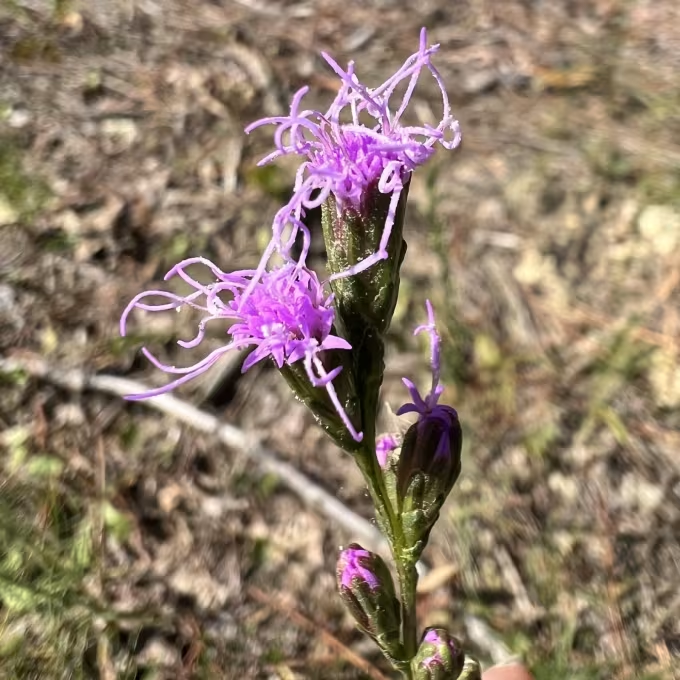
Description
Sowing dates
Liatris pilosa, a member of the Asteraceae family, is a perennial flowering plant often grown for both ornamental purposes and the commercial cut flower industry. Seeds are typically sown in late autumn for winter stratification or in early spring under controlled greenhouse conditions.
The germination process requires steady temperatures between 18 and 20 degrees Celsius. When sowing in trays, seeds should be lightly covered with a fine layer of vermiculite or soil, keeping the moisture levels consistent until seedlings emerge.
For commercial propagation, dividing the corm-like tubers is highly recommended. This process is best performed during the dormancy period in early spring, ensuring each division contains at least one viable growing point.
Seedlings develop a robust root system during the first growing season, with flowering typically commencing in the second year. Adequate spacing of 20 to 30 centimeters is recommended to ensure proper airflow and light penetration.
Consistent irrigation during the establishment phase is critical for uniform growth. Once established, the plant demonstrates improved drought tolerance compared to many other perennial species in the same family.
Growing requirements
Liatris pilosa is native to the southeastern United States, thriving in full sun exposure. It requires at least 6 to 8 hours of direct sunlight daily to maintain its upright habit and productive flowering capacity.
The plant performs best in well-draining, sandy loam soils. It is highly sensitive to waterlogged conditions, which can lead to root decay, so selecting a site with natural elevation or installing tile drainage is advisable.
Soil pH levels should be maintained in the neutral to slightly acidic range. Amending the soil with organic matter before planting helps improve moisture retention without compromising the vital drainage properties.
While the plant is relatively low-maintenance, a balanced slow-release fertilizer can be applied in the early spring to promote vigorous foliage and sturdy flower spikes.
Winter hardiness is excellent across most temperate zones. No special overwintering protection is required, provided that the soil drainage is sufficient to prevent ice formation around the tubers.
Main diseases and pests
The primary threat to Liatris pilosa is fungal root rot, which is almost exclusively associated with poorly drained soils. Improving soil aeration remains the most effective preventive measure.
Pests such as voles, slugs, and certain beetle larvae can cause significant damage to the tubers and emerging shoots. Implementing integrated pest management strategies, including baiting or physical barriers, is recommended.
Powdery mildew may occur during periods of high humidity and poor air circulation. Applying appropriate fungicides and maintaining proper plant spacing are effective ways to minimize the risk of infection.
Regular monitoring for signs of stress or discoloration is essential. Early identification of pest or disease pressure allows for targeted interventions, reducing the need for broad-spectrum chemical applications.
Good cultural practices, such as removing debris at the end of the season and rotating crops if necessary, play a vital role in maintaining the overall health and productivity of the planting.
Harvesting
Commercial harvesting of Liatris pilosa begins when the top-down flowering progression reaches approximately one-third to one-half of the spike. This stage ensures the longest vase life for cut flowers.
Harvesting should occur in the cool hours of the early morning. Using sanitized pruning shears, stems are cut at the base, ensuring that a significant portion of the basal foliage remains to support the plant for next year.
Immediately after cutting, stems should be placed in cool, clean water. Keeping the harvested flowers in a temperature-controlled environment helps maintain their turgidity and overall market value.
For seed production, the flower spikes are left on the plant until they dry and turn brown. The heads are then collected, dried indoors, and threshed to extract the seeds.
At the conclusion of the growing season, all dead foliage should be cut back to the ground level. This preparation prevents the spread of pathogens and keeps the planting site tidy for the dormant season.