
Leptospermum rotundifolium hybrid
Leptospermum rotundifolium x spectabile
Description
Growing requirements
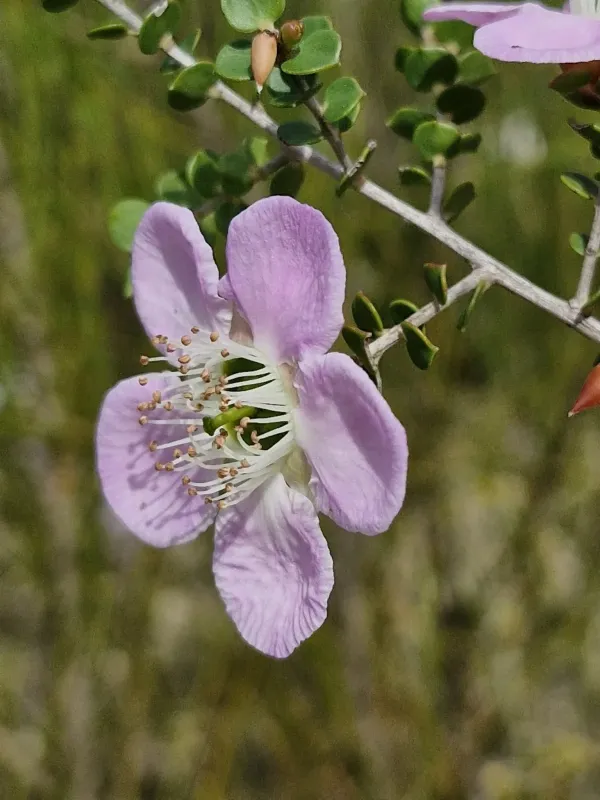
Leptospermum rotundifolium hybrid is a decorative evergreen shrub belonging to the Myrtaceae family, highly valued for its dense, rounded leaves and vibrant floral displays during the flowering season.
Originating from Australia, this cultivar thrives in mild, temperate climates where it can receive abundant sunlight. It is not frost-tolerant and generally requires protection in areas where temperatures drop below freezing.
The ideal growing medium for this plant must be acidic, sandy, and possess excellent drainage. Poor drainage is the most common cause of failure in cultivating this species, as the root system is highly sensitive to waterlogging.
Agricultural techniques for this species include maintaining a consistent moisture level during the active growing season while ensuring that the soil is never soggy, which helps prevent root rot.
It is primarily utilized as an ornamental plant in landscapes, rock gardens, or as a container plant. Its aesthetic appeal makes it a popular choice for conservatory displays and garden centers.
Main diseases and pests
The primary threats to Leptospermum health include root rot pathogens, which thrive in stagnant water and compacted soil conditions.
Pests like spider mites and mealybugs can pose significant risks, especially in indoor environments or greenhouses where humidity and ventilation may be poorly controlled.
Control measures involve applying appropriate horticultural soaps or systemic insecticides to manage pest populations before they cause structural damage to the foliage.
Chlorosis is a common nutrient deficiency observed in this species, often caused by an alkaline pH, which prevents the uptake of essential iron and micronutrients.
Proper pruning after flowering is essential for maintaining plant vigor, reducing overcrowding, and ensuring adequate light penetration to prevent fungal development on lower branches.