
Leptochilus decurrens
Leptochilus decurrens
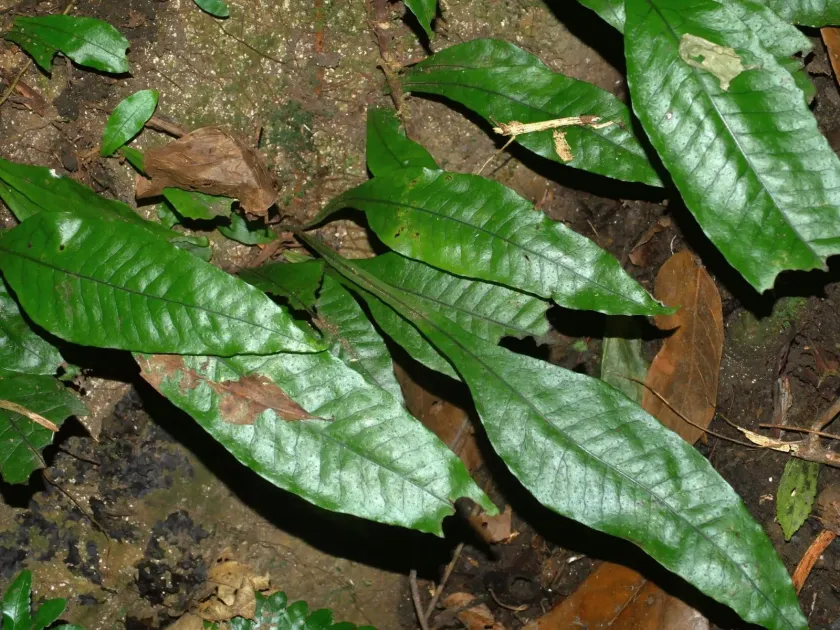
Description
Growing requirements
Leptochilus decurrens is a perennial fern belonging to the Polypodiaceae family. It is native to the tropical regions of Asia, where it thrives in humid and shaded forest environments, often anchoring itself to rocks or decaying timber on the forest floor.
The plant is distinguished by its unique leathery foliage, characterized by decurrent leaf bases that extend down the stipe. Its creeping rhizomes allow it to spread across the substrate, making it an excellent candidate for humid terrariums and specialized greenhouse settings.
Successful cultivation requires environmental conditions that mimic its native tropical habitat. Optimal temperatures range between 20°C and 25°C, with high ambient humidity being essential to prevent the leaf tips from browning and to maintain general plant health.
The growing medium must be loose, airy, and moisture-retentive but well-draining. A mix consisting of peat, orchid bark, and sphagnum moss is ideal for supporting the root system without promoting anaerobic conditions that lead to root rot.
This fern is primarily utilized in horticultural collections and interior landscaping where low-light tolerance is required. It adds an exotic aesthetic to terrarium displays and is highly valued by enthusiasts of rare tropical foliage.
Main diseases and pests
Spider mites are the most common pest to affect Leptochilus decurrens, especially in indoor environments with low humidity levels. Regular misting and maintaining proper moisture levels are the most effective non-chemical preventative measures against infestation.
Scale insects can also pose a threat, attaching themselves to the undersides of the leaves. Manual removal or the application of gentle horticultural soaps is recommended, as ferns can be sensitive to harsh chemical treatments often found in standard insecticides.
Root rot is the most significant disease risk, typically caused by overwatering or inadequate drainage. The accumulation of excess water around the rhizome promotes the growth of pathogens that cause rapid tissue decay and plant collapse.
To maintain plant health, it is crucial to sterilize all tools during propagation and repotting. Removing dead or damaged foliage promptly helps keep the plant robust and prevents the development of fungal spores on decaying plant material.
By providing stable conditions and consistent care, Leptochilus decurrens remains a resilient and attractive specimen. A proactive approach to monitoring and environmental control ensures long-term success in its cultivation.