
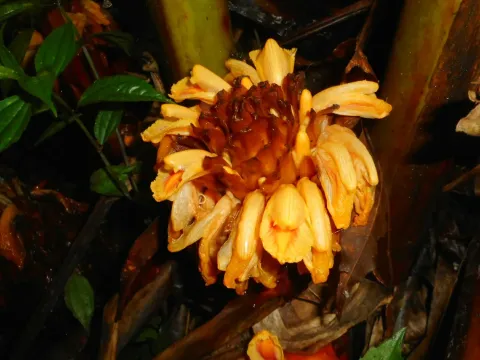
Lanxangia
Lanxangia M. F. Newman & Škorničk.
Lanxangia is a perennial herb that is primarily propagated through the division of rhizomes, which ensures the consistency of its desirable aromatic and medicinal properties.
What the section contains

Lanxangia
The ideal planting time coincides with the start of the rainy season, allowing the rhizomes to establish their root systems quickly in the warm, moist soil.
When propagating via seeds, nurseries should use a rich, well-draining substrate to maintain consistent moisture levels and promote uniform germination rates.
It is essential to maintain proper spacing between individual plants to prevent competition for essential nutrients and sunlight during the intensive growth phase.
Young plants often require partial shade, so intercropping with taller vegetation is a common strategy to protect them from excessive heat and direct sunlight.
As a member of the Zingiberaceae (Ginger) family, Lanxangia thrives in tropical and subtropical environments that provide steady warmth and high humidity.
The crop requires fertile, loose, and well-draining soil with a pH level ranging from slightly acidic to neutral to support healthy rhizome expansion.
Adequate water supply is crucial; the soil should be kept moist but never waterlogged to avoid root rot and other moisture-related health issues.
Temperature fluctuations should be kept to a minimum, as the plant is sensitive to thermal stress, which can lead to stunted growth and reduced yields.
Wind protection is necessary in open fields to prevent the excessive drying of leaves and the structural damage that can weaken the plant's metabolic capacity.
The primary economic value of Lanxangia lies in its aromatic rhizomes and fruits, which are highly sought after for their use in traditional medicine and the spice industry.
Effective yield management depends on regular soil fertilization, particularly the application of organic matter, which enhances the development of the root system.
Proper weed management is essential during the early stages of growth to ensure that the plants have full access to available nutrients in the soil.
With careful long-term care, plantations can remain productive for several seasons, providing reliable harvests without the need for frequent replanting.
Quality control during post-harvest processing is key to maximizing profit, as the market value is directly linked to the purity and aroma of the dried product.
Fungal pathogens represent the most significant threat to Lanxangia, especially in environments where humidity is excessively high or soil aeration is poor.
Root rot and stem blight are common concerns that can quickly destroy parts of a crop if early detection and sanitation practices are not implemented.
Soil-dwelling insects can cause physical damage to the rhizomes, creating entry points for opportunistic infections that lead to widespread plant loss.
Preventive measures include strict crop rotation, the use of certified disease-free planting material, and careful observation of the fields for early signs of distress.
Balanced fertilizer application is necessary, as excessive nitrogen can make the plant more susceptible to leaf diseases and other stress-related conditions.
The harvest must be conducted with high precision to minimize physical damage to the rhizomes, which are the most delicate and valuable parts of the plant.
Harvesting is typically initiated when the plant reaches physiological maturity and the concentration of essential oils within the tissues peaks.
After being extracted from the soil, the harvested material should be cleaned gently to remove debris and then prepared immediately for the drying process.
Proper drying under ventilated conditions is vital to preserve the unique chemical composition and flavor profile of the harvested spice.
Storage should be carried out in climate-controlled environments to prevent the degradation of aromatic compounds and protect the goods from pest infestations.