
Lannea schimperi
Lannea schimperi
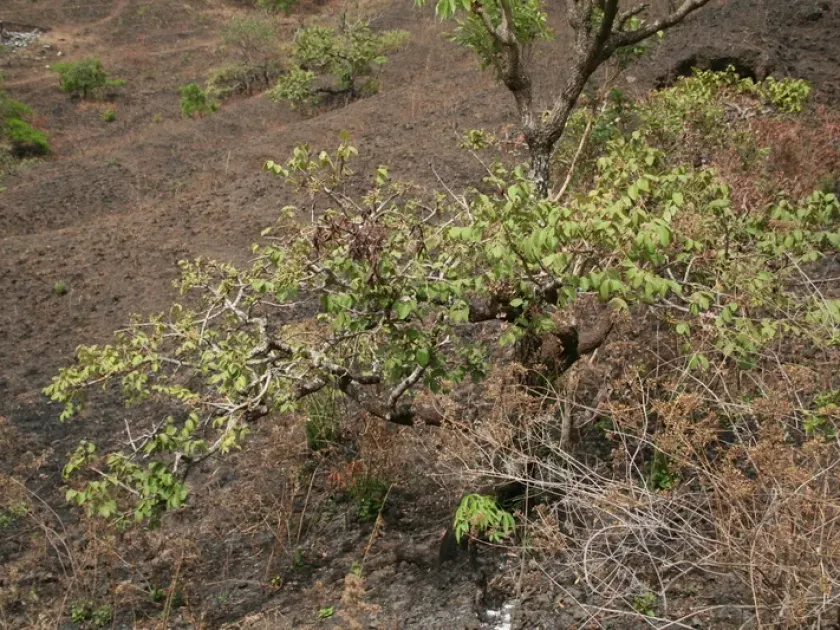
Description
Growing requirements
Lannea schimperi is a species of deciduous tree belonging to the Anacardiaceae family, native to the savanna and woodland regions of tropical Africa. It is well-adapted to environments characterized by long dry seasons and seasonal rainfall patterns.
The tree thrives in well-drained, sandy, or stony soils that prevent waterlogging. It has evolved a deep taproot system, which allows it to access groundwater during prolonged droughts, making it a resilient species for arid and semi-arid conditions.
Regarding climate, Lannea schimperi requires high levels of solar radiation and warm temperatures throughout the year. It does not possess frost tolerance, meaning its cultivation is restricted to tropical and sub-tropical latitudes where thermal conditions remain stable.
Botanically, the species is defined by its pinnate leaves and small, yellowish-green flowers arranged in terminal racemes. The fruits are drupes that serve as a source of food for birds, which in turn facilitate the seed dispersal process within the ecosystem.
The economic utility of the species is diverse, encompassing traditional medical applications, such as the use of bark extracts for their healing properties, and the utilization of its wood for localized craft making and fuel production in rural areas.
Main diseases and pests
Lannea schimperi is susceptible to various leaf-feeding insects, especially during the flush of new growth. While mature trees are generally robust, repeated infestations can weaken younger specimens and reduce the overall annual growth rate.
Fungal pathogens represent a significant risk when the tree is exposed to high humidity or suffers from mechanical injury. Lesions on the bark or branches provide entry points for pathogens, leading to wood decay and weakened structural integrity of the tree.
Pest management strategies should focus on preventive measures, such as maintaining proper planting density to improve air circulation within the canopy. Regular inspection of the stem and foliage is essential to detect early signs of infestation or disease.
Herbivorous mammals, particularly in wild or semi-wild settings, often browse on the bark and foliage of saplings. Protecting young plants with physical barriers is a standard agrotechnical requirement to ensure successful establishment during the first few years.
Cultural practices, including the removal of dead or infected branches, significantly contribute to the long-term health of the plantation. Integrating these methods helps maintain the aesthetic and functional quality of Lannea schimperi stands.