
Lannea coromandelica
Lannea coromandelica
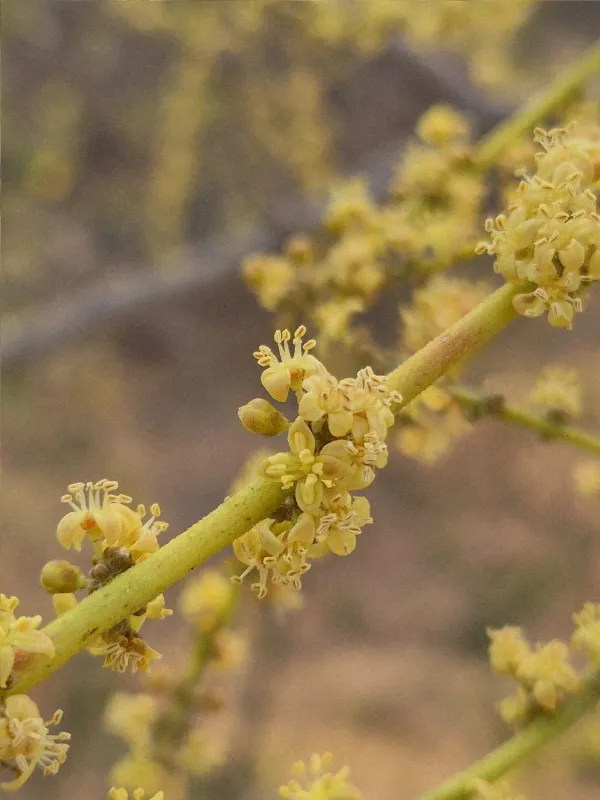
Description
Growing requirements
Lannea coromandelica is a prominent deciduous tree species within the Anacardiaceae family, native to the tropical forests of South and Southeast Asia.
The tree demonstrates exceptional adaptability to various climates, thriving in both humid tropical zones and regions experiencing significant seasonal drought.
Agronomically, it prefers deep, well-drained loamy soils but displays remarkable resilience in nutrient-poor substrates, making it suitable for reforestation efforts.
It requires ample solar radiation for optimal growth and should be positioned in open areas to avoid shading issues that can stunt structural development.
Beyond its ecological value, the tree is economically significant for its timber, which is used for plywood, and its gum, which serves various industrial applications.
Main diseases and pests
The primary threats to Lannea coromandelica health are fungal pathogens that affect the root system, especially in areas with poor drainage and waterlogging.
Stem-boring insects present a persistent challenge, as they penetrate the bark and can cause severe structural damage to the main trunk of the tree.
Management strategies focus on maintaining tree vigor through proper spacing and regular sanitation, which helps in identifying and removing infested limbs.
Leaf-eating caterpillars may occasionally cause defoliation, which, while rarely fatal to mature trees, can impact the growth rates of younger saplings.
Integrated pest management (IPM) practices, including biological controls, are recommended to maintain the long-term sustainability of the plantation.