
Lannea microcarpa
Lannea microcarpa
Description
Growing requirements
Lannea microcarpa belongs to the Anacardiaceae family. It is a deciduous tree native to the savanna regions of West and Central Africa, known for its high resilience to harsh environments and prolonged dry seasons.
The tree thrives in well-drained sandy or loamy soils typical of the Sudanian savanna belt. It exhibits remarkable adaptation to climates with long dry spells lasting up to seven months, making it an ideal candidate for reforestation in arid areas.
Optimal growth occurs in areas with an annual rainfall between 500 and 1000 mm. As a heliophilous species, it requires full sun exposure and generally does not tolerate heavy shading from larger canopy trees during its establishment phase.
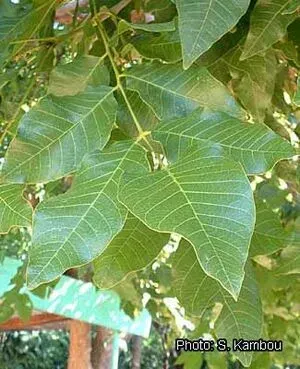
Botanically, it is a medium-sized tree, growing up to 10-12 meters tall with a spreading crown and pinnate leaves. The small drupe fruits turn from green to red and eventually purple-black upon ripening, serving as a vital food source.
The root system is deep and extensive, allowing the tree to extract water from lower soil strata. This biological feature helps stabilize soil structures and prevents land degradation in fragile savanna ecosystems.
Yield
The fruits of Lannea microcarpa are highly valued for their nutritional content, including sugars and essential vitamins. They are consumed fresh by local communities or dried and processed into flour and traditional beverages.
The bark of the tree is widely utilized in ethnomedicine to treat various ailments. It is also a rich source of tannins used in traditional leather tanning processes, adding significant economic value to the species.
Leaves serve as a critical fodder resource for livestock, particularly during the dry season when ground-level vegetation is scarce. This makes the tree an essential component of silvopastoral systems in rural Africa.
The wood is moderately dense and is primarily used for making household utensils, small carvings, and tool handles. While not commercially harvested on a massive scale, it supports local artisanal and subsistence economies.
Furthermore, the tree produces a type of edible gum. This exudate is collected and used in both traditional pharmacology and local food industries, providing an additional source of income for smallholder farmers.
Main diseases and pests
Uncontrolled livestock grazing remains the primary threat to saplings, as browsing animals frequently damage the young growth, severely limiting natural regeneration and the establishment of new tree clusters.
Pests such as wood-boring beetles and certain leaf-eating insects can affect trees that are already stressed by severe drought, leading to branch dieback or reduced vitality in localized populations.
Fungal infections can occur during periods of high humidity, especially if the tree has open wounds or bark damage. While generally robust, such conditions may lead to localized necrosis if not managed properly.
Deforestation for fuel wood production poses a major threat to the survival of mature trees. Without sustainable harvesting management, the density of natural populations continues to decrease in several regions.
To preserve the species, it is recommended to implement protection measures for young trees, such as physical barriers, and to promote sustainable bark and fruit harvesting techniques among local communities.