
Queen's crape myrtle
Lagerstroemia speciosa (L.) Pers.
Description
Growing requirements
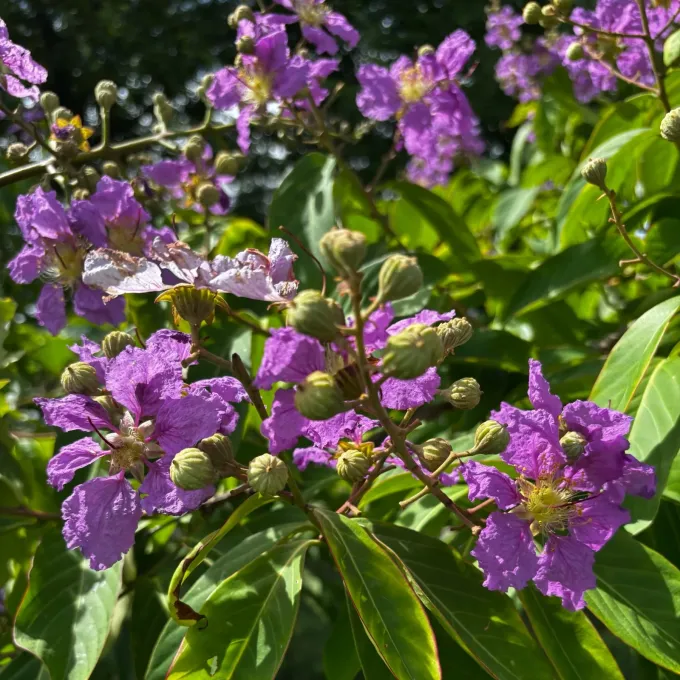
Queen's crape myrtle (Lagerstroemia speciosa) is a prominent species in the Lythraceae family, valued for its spectacular large panicles of crinkled, showy flowers. This plant is characterized by its smooth, mottled bark and oval leaves, which provide a lush appearance throughout the year.
Native to the tropical regions of Southeast Asia, the species thrives in warm, humid climates. It is widely cultivated as an ornamental tree in tropical and subtropical landscapes, where it serves as a stunning focal point during the peak blooming season, which often coincides with the warmest summer months.
The crop demands deep, fertile, and well-drained soil to support its vigorous root system. While it shows some tolerance to various soil types, its productivity and flower density are significantly improved in slightly acidic to neutral soil environments that are rich in organic matter.
Climatic requirements are strict: the tree requires full sun exposure to produce high-quality blooms. It is not frost-tolerant and must be protected or moved indoors in temperate zones, as temperatures below freezing can cause severe damage to the vascular system and permanent dieback of terminal shoots.
Management practices should prioritize consistent irrigation during dry spells, especially for younger trees still establishing their root systems. Pruning is recommended after the flowering period to remove spent blooms and maintain a desired canopy shape, which encourages stronger growth for the following season.
Main diseases and pests
Pest pressures primarily include aphids and mites, which can infest the tender leaves during rapid growth phases. These pests are often managed through integrated pest management (IPM) practices, such as encouraging beneficial predatory insects and targeted application of horticultural oils.
Disease management focuses on preventing fungal infections like powdery mildew, particularly in high-humidity environments. Ensuring adequate spacing between plants to improve airflow and avoiding overhead irrigation can significantly reduce the incidence of foliar diseases during humid periods.