
Korean fir
Abies koreana E. H. Wilson
Description
Growing requirements
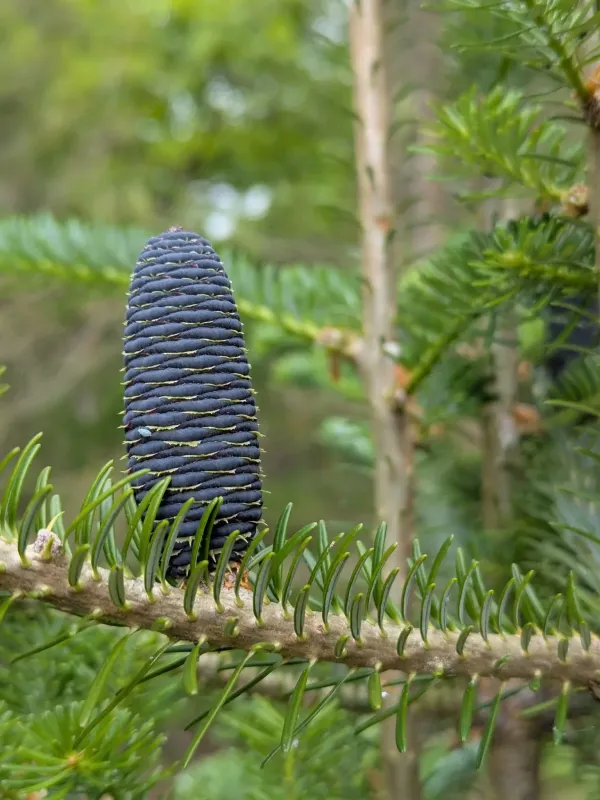
The Korean fir (Abies koreana) belongs to the Pinaceae family. It is a slow-growing evergreen conifer known for its dense, symmetrical growth habit and stunning, upright purple-blue cones.
Native to the high-altitude mountain regions of the Korean Peninsula, this tree is highly valued for its cold hardiness and aesthetic appeal in landscape architecture.
The tree thrives in moist, well-drained, slightly acidic, and nutrient-rich soils. It does not tolerate waterlogged conditions, making proper soil drainage a critical factor for success.
Regarding climate, it prefers cool, humid environments. In warmer zones, it requires partial shade during the hottest parts of the day to prevent the needles from scorching.
Cultivation requires minimal maintenance once established. A layer of organic mulch around the base helps retain moisture, regulate soil temperature, and suppress weeds.
Main diseases and pests
The Korean fir is susceptible to various fungal diseases, including root rot and needle cast, often triggered by poor site conditions or lack of adequate airflow within the canopy.
The Balsam woolly adelgid is a significant pest that can weaken the tree by feeding on the sap. It is often identified by the white, cottony wax masses found on the bark.
Spider mites are another common threat, particularly in dry and hot summers, leading to mottled, faded needles and potential needle drop if not managed promptly.
Effective management includes regular monitoring of the foliage and implementing integrated pest management practices to maintain the tree's vigor and resistance.
Pruning is generally not required for these trees, but removing dead or diseased branches helps prevent the spread of pathogens throughout the specimen.