

Description
Sowing dates
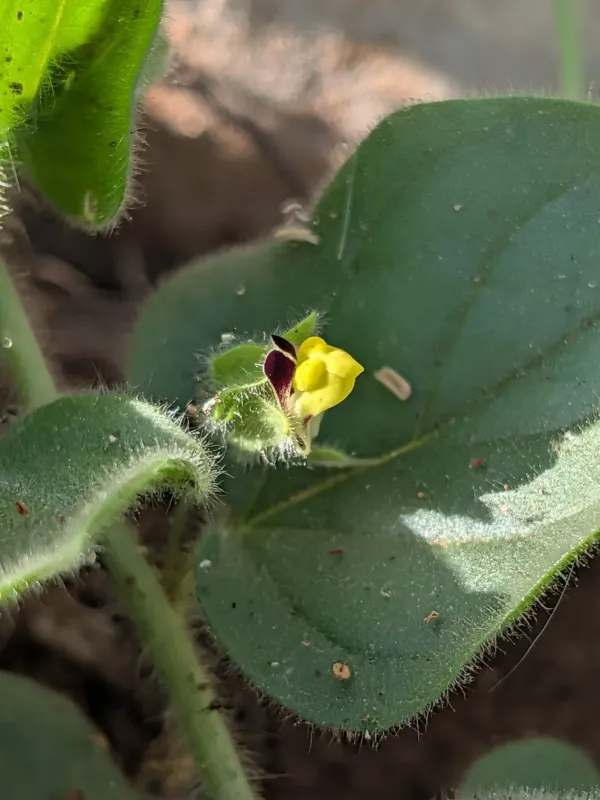
Roundleaf fluellin (Kickxia spuria) is an annual herbaceous weed belonging to the Plantaginaceae family, commonly found in arable lands.
Its germination cycle is triggered by spring soil warming, with active growth phases aligning with the development of standard cereal crops.
The seeds possess remarkable dormancy characteristics, enabling the plant to persist in the soil for several years before germinating.
Seedlings emerge in succession throughout the spring and early summer, necessitating consistent monitoring of the fields during the early stages.
The biological strategy of this plant is to establish a deep root system quickly, ensuring survival and dominance over less competitive crop seedlings.
Growing requirements
Kickxia spuria thrives in sunny, open areas and is particularly well-adapted to disturbed soils, including tilled fields and field margins.
The plant exhibits a high degree of drought tolerance, allowing it to maintain growth even when soil moisture levels are low.
It prefers neutral to slightly alkaline soil conditions and tends to colonize areas with light, porous soil structures where drainage is efficient.
Managing the weed effectively requires balanced nutrient applications to promote crop growth, alongside non-chemical tillage practices.
Integrated weed management remains the most successful strategy to mitigate the environmental and agricultural impact of this species.
Main diseases and pests
This weed acts as a secondary host for various plant pathogens, significantly increasing the risk of crop disease transmission within the field.
Competition with crop plants for water, nutrients, and sunlight leads to reduced crop vigor and potential yield losses in high infestation areas.
Various insects often utilize the weed as a shelter, leading to secondary infestations on the main crop as the season progresses.
The presence of Kickxia spuria is often associated with the decline in overall plant health of cereal varieties, requiring chemical interventions.
Effective control measures include the use of selective herbicides and strict adherence to crop rotation protocols to break the weed's life cycle.
Harvesting
During the harvest season, the presence of Kickxia spuria can interfere with the operation of combine harvesters and other agricultural machinery.
The dense vegetative biomass of the weed can lead to clogging of the threshing mechanism, reducing harvesting speed and efficiency.
Contamination of harvested grain with weed seeds and plant debris increases the costs associated with post-harvest drying and cleaning procedures.
Early harvest or desiccation may be required in fields with high infestation levels to prevent further seed dispersal and ensure product quality.
Post-harvest soil preparation, such as harrowing or shallow cultivation, is vital to stimulate seed germination and eliminate dormant reserves.
Reference
Connections · Roundleaf fluellin
Most often together:
Marketplace
