
Justicia pictifolia
Justicia pictifolia Standl.
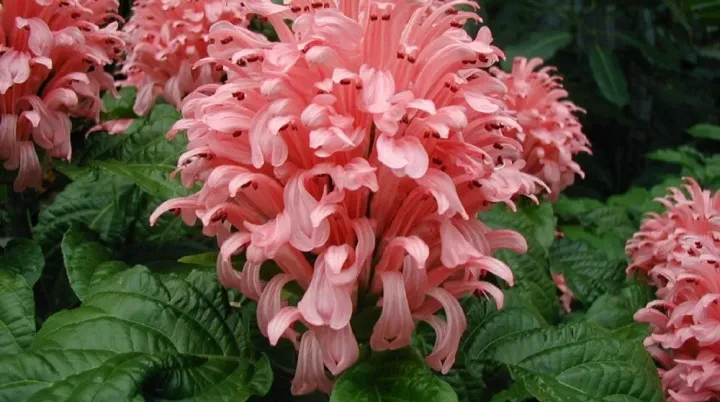
Description
Growing requirements
Justicia pictifolia is an ornamental plant belonging to the Acanthaceae family, known for its distinctively patterned foliage. Originating from tropical environments, it thrives in warm and humid conditions, requiring specific care for optimal indoor or greenhouse growth.
The plant requires a stable temperature environment ranging between 20 °C and 25 °C. Exposure to sudden temperature drops or cold drafts should be strictly avoided to prevent foliage loss and growth stunting, as the species is sensitive to sudden changes.
A well-draining, nutrient-rich soil mix is essential for the healthy development of the plant. A substrate composed of peat, perlite, and organic matter is recommended to ensure adequate moisture retention while preventing the risk of waterlogging in the root zone.
Light requirements are focused on bright but indirect sunlight. Direct exposure to intense rays can damage the leaves, while insufficient light leads to the loss of the characteristic variegation in the leaf pattern, making it look dull and elongated.
Regular maintenance involves keeping high atmospheric humidity. This can be achieved through regular misting or placing the container on a tray with damp pebbles. During the dormant winter phase, watering frequency must be reduced to accommodate the plant's slower metabolism.
Main diseases and pests
Common pests affecting Justicia pictifolia include spider mites and mealybugs, especially in environments with low humidity. Integrated pest management using insecticidal soaps or specific horticultural oils is recommended upon detection of these infestations.
Root rot is the most common pathology resulting from poor soil drainage or overwatering. Maintaining a schedule that allows the top layer of soil to dry out slightly before the next watering session is the primary preventative measure against fungal development.
Leaf chlorosis is frequently observed when soil pH levels are not optimal or when there is a deficiency in essential trace elements. Regular application of a balanced, water-soluble fertilizer formulated for ornamental foliage plants is advised during the growth season.
Poor ventilation can promote the spread of fungal diseases such as powdery mildew, especially in crowded greenhouse conditions. Ensuring adequate airflow between plants is a crucial step in maintaining long-term foliage health.
Annual inspection of the plant's health is necessary to ensure it is not becoming root-bound. Re-potting into a slightly larger container once every two years helps replenish nutrients and supports the continuous development of the plant structure.