
Brazilian plume
Justicia carnea Lindl.
Description
Growing requirements
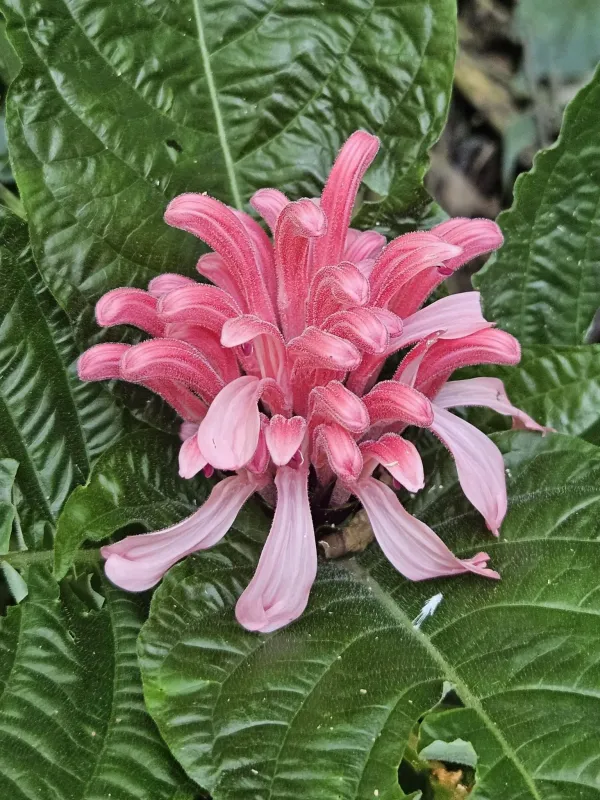
Justicia carnea, known as the Brazilian plume, is a perennial flowering shrub within the Acanthaceae family. It is native to the tropical forests of South America and is widely recognized for its striking, plume-like pink flowers.
The plant thrives in warm, stable climates, requiring temperatures between 18 and 25 degrees Celsius. It cannot tolerate freezing temperatures, making greenhouse or indoor cultivation essential for non-tropical regions.
Soil requirements involve a rich, well-draining potting medium. A mixture of peat, loam, and coarse sand provides the necessary balance of moisture retention and root aeration required for vigorous growth.
Watering frequency should be moderate, ensuring the soil remains moist but never waterlogged. As a tropical species, it requires high humidity levels, often necessitating frequent misting or the use of humidity trays.
Bright, indirect light is the ideal environment for the Brazilian plume. Direct afternoon sun can scorch the foliage, while insufficient light may result in reduced flowering and weak, spindly stems.
Main diseases and pests
The primary pests affecting Justicia carnea include spider mites and mealybugs, which are particularly problematic in dry indoor environments with poor airflow.
Fungal issues, specifically root rot, are common symptoms of overwatering. Ensuring proper drainage and allowing the top inch of soil to dry out between waterings is essential for prevention.
Aphids may infest new growth during the spring, requiring careful monitoring and potential application of insecticidal soaps to protect the developing buds.
Powdery mildew can occur if the foliage remains wet for extended periods or if air circulation is inadequate. Maintaining a dry leaf surface and good ventilation helps mitigate this risk.
Regular sanitation, including the removal of dead leaves and stems, prevents the accumulation of pests and pathogens, ensuring the long-term health and vitality of the specimen.