
Justicia candicans
Justicia candicans nees l benson
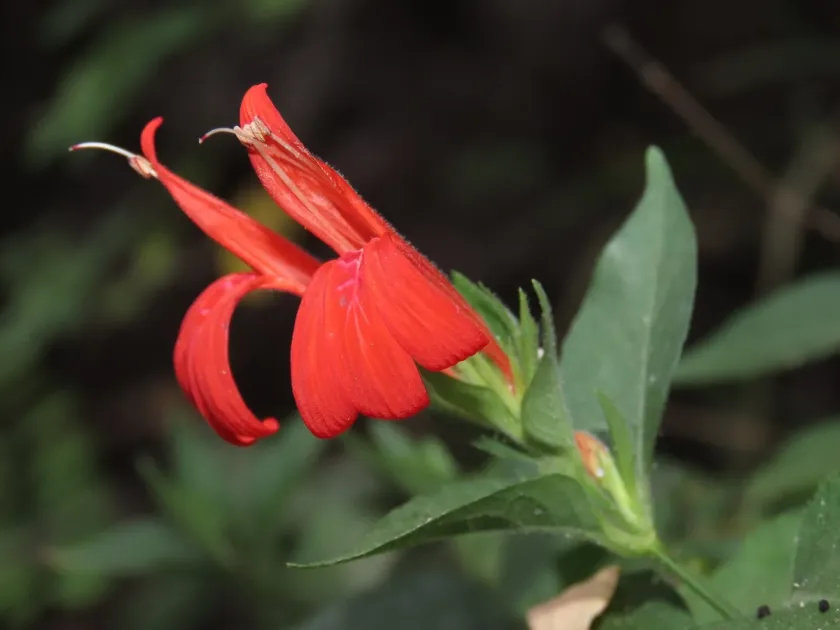
Description
Growing requirements
Justicia candicans is a perennial evergreen shrub belonging to the Acanthaceae family. It is recognized for its elegant growth habit and its ability to flourish in specific semi-arid environmental conditions.
Originating from the southwestern United States and northern Mexico, the plant is naturally adapted to high light intensity and low to moderate rainfall. Its historical range focuses on rocky, well-draining slopes.
The ideal growing medium for this culture is a light, porous soil mix with excellent drainage properties. While it thrives in rocky soils, supplementing the substrate with organic matter enhances overall vigor and bloom quality.
Climatic requirements involve plenty of direct sunlight to partial shade. As a drought-tolerant species, it requires careful irrigation management, especially during the establishment phase, to prevent dehydration.
Standard agronomic practices include formative pruning after the flowering season to maintain the desired size and shape. Regular weeding around the base of the plant is essential to reduce competition for soil moisture and nutrients.
Main diseases and pests
The primary agricultural threat to Justicia candicans is waterlogging, which severely compromises root health. Poor soil drainage almost invariably leads to root rot pathogens that can destroy the plant within a single season.
Spider mites represent the most significant pest concern, particularly in arid climates where humidity is consistently low. Infestations lead to chlorosis and can eventually cause premature leaf drop if not addressed promptly.
Mealybugs are another common pest that tends to cluster in protected areas of the stems. These insects sap the energy from the shrub, causing stunted growth and providing an entry point for secondary fungal infections.
Aphids can also colonize soft new growth during the spring, leading to leaf curling and distorted development. Regular monitoring of the growing tips helps in detecting early colonies before they reach problematic levels.
To mitigate disease risks, ensure proper spacing between individual shrubs to maximize airflow. Good ventilation is the most effective natural defense against powdery mildew and other foliar diseases during humid periods.