
Anemone hupehensis
Anemone hupehensis Lemoine
Description
Growing requirements
Anemone hupehensis, a member of the Ranunculaceae family, is a herbaceous perennial prized for its late-season blooms. It is widely cultivated for its reliable performance in autumn gardens and its graceful aesthetic.
Originating from central and eastern China, this species has been successfully introduced to temperate zones globally. It thrives best in regions with moderate moisture and protected sites that offer partial shade or dappled sunlight.
The plant demands fertile, well-draining soil that is rich in organic matter. While it prefers consistent moisture, it is sensitive to waterlogged conditions, which can lead to the decay of its rhizomatous root system.
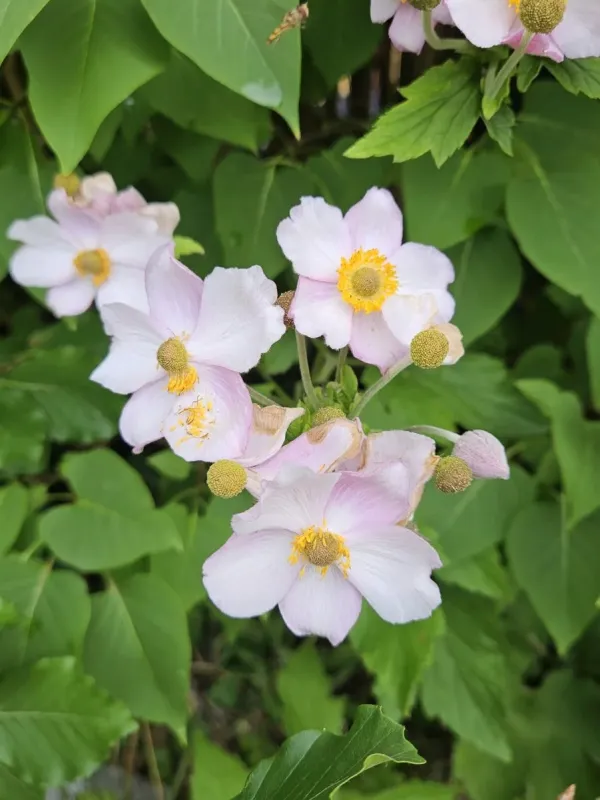
Botanically, it features a basal rosette of dark green, palmately lobed leaves and slender yet sturdy flower stalks. The blossoms, varying from white to pinkish shades, provide late interest when many other garden plants have finished flowering.
In landscaping, Anemone hupehensis is used for border planting, woodland gardens, and mass displays. Its ability to create a carpet-like effect makes it highly valued for horticultural projects aimed at low-maintenance garden design.
Main diseases and pests
Leaf nematodes are one of the primary pests affecting this species, often causing discolored patches and stunted development. Proper sanitation, including the removal of infested leaves, is critical to controlling their spread.
Aphids may gather on young flower buds and tender shoots. While usually manageable, large infestations can weaken the plant and serve as vectors for various viral diseases, necessitating targeted insecticidal intervention.
Powdery mildew is a common fungal threat, particularly in late summer when humidity is high and airflow is restricted. Proper spacing between individual plants is the most effective preventative measure against this pathogen.
Fungal root rots, caused by Pythium or Phytophthora, can devastate plantings in poorly drained soils. Ensuring adequate soil structure and avoiding excessive watering are fundamental aspects of successful cultivation.
Garden slugs and snails can cause significant damage to early spring foliage. Using barriers, such as copper tape or organic baits, is recommended in environments where these gastropods are prevalent to maintain the plant's health.