
Jacquemontia tamnifolia
Jacquemontia tamnifolia
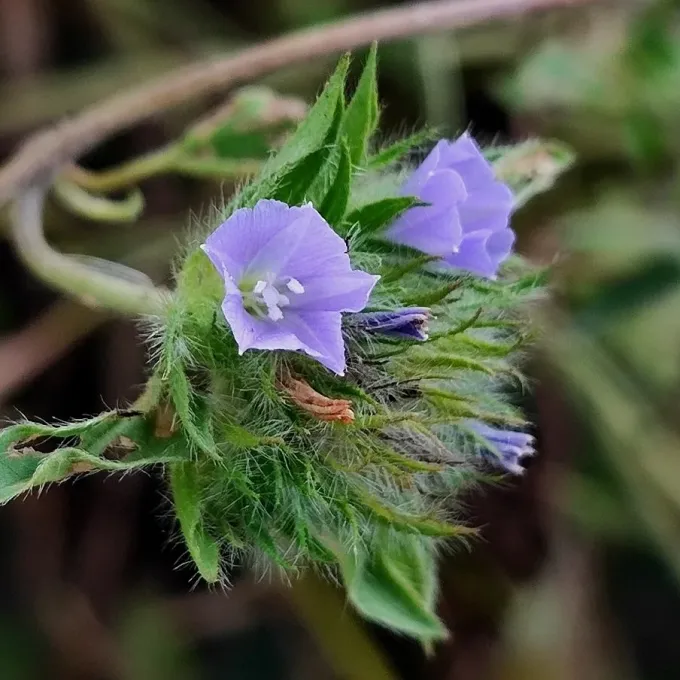
Description
Sowing dates
Jacquemontia tamnifolia, commonly known as hairy cluster vine, is an annual herbaceous climbing plant belonging to the Convolvulaceae family. While it has some aesthetic value, in an agricultural setting, it is primarily recognized as a persistent weed that invades row crops.
The germination of this species is highly dependent on soil temperature, typically peaking during late spring and summer months. The seeds are characterized by a long dormancy period, allowing them to form a robust seed bank in the soil that can persist for several years.
Once conditions are favorable, emergence is relatively rapid and often occurs in waves following rainfall events. Seeds located within the upper few centimeters of the soil profile show the highest potential for successful germination and establishment.
The growth cycle is relatively long, extending throughout the hot summer season. The plant initiates climbing behavior shortly after the formation of primary leaves, utilizing surrounding crops as physical support for vertical growth.
Agronomic management must prioritize early intervention before the plant enters its reproductive stage. Mechanical cultivation in the early stages of crop development is essential to prevent the vine from overshadowing the main commodity crop.
Growing requirements
Jacquemontia tamnifolia thrives in warm, temperate to tropical climates, demonstrating a high heat tolerance. It requires abundant sunlight and is typically found in open fields where it does not face significant light competition until it outgrows its neighbors.
It displays significant adaptability regarding soil types, performing well on both loamy and sandy soils. However, it shows a clear preference for fertile, well-drained soils with a steady moisture supply to support its rapid biomass accumulation.
Soil moisture levels play a critical role in the vegetative expansion of the plant. During periods of drought, the plant may exhibit reduced growth rates but maintains the ability to recover rapidly once soil moisture becomes available.
Nutrient availability, particularly nitrogen, significantly impacts the plant's competitive ability. A high nitrogen environment often results in more vigorous vine growth, allowing the weed to climb higher and shade out cultural crops more effectively.
Effective control strategies require a combination of crop rotation, strategic herbicide applications, and timely mechanical cultivation. Maintaining field hygiene along borders is also crucial for preventing localized infestations.
Main diseases and pests
The primary agricultural threat posed by Jacquemontia tamnifolia is its competitive nature, as it vines around and smothers crop plants. This physical entanglement complicates mechanical harvesting and leads to significant yield losses due to reduced light interception.
While the plant can host certain pests, such as aphids and leaf-feeding beetles, it rarely suffers from these infestations. Its robust nature makes it difficult to manage solely through natural biotic factors like insect predation.
Fungal diseases, including various types of leaf spots, can affect the foliage, especially in humid conditions. However, these rarely limit the plant's spread in large-scale agricultural environments where moisture is consistently provided to crops.
Chemical control remains the most reliable method for managing this species in modern farming systems. Systemic herbicides are commonly used, though efficacy is highest when applied to young, actively growing plants before they harden.
Long-term infestation management relies heavily on preventing seed production. If left uncontrolled, the plant can release thousands of seeds per season, significantly increasing the density of the soil seed bank for future years.