
Italian bugloss
Anchusa azurea Mill.
Description
Sowing dates
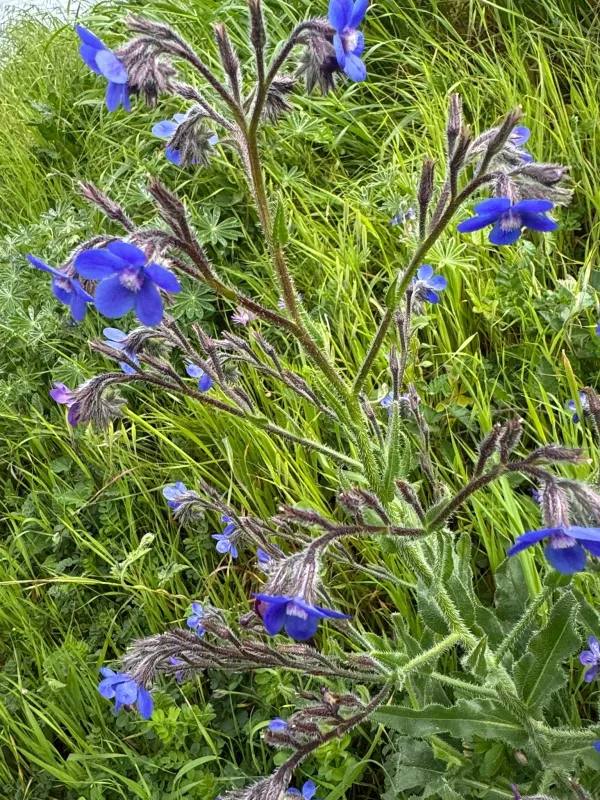
Anchusa azurea, commonly known as Italian bugloss, is a herbaceous perennial belonging to the Boraginaceae family. Due to its tendency to lose vigor over time, it is frequently cultivated as a biennial in garden settings. Seeds should be sown in early spring or autumn.
For indoor propagation, seeds are sown in trays during March. Germination typically occurs within 14 to 20 days at temperatures around 18–20 degrees Celsius. Seedlings must be pricked out into individual pots once the first true leaves appear to avoid root damage.
Transplanting to the permanent location takes place in late May, once the risk of frost has passed. Planting density should allow for the plant's significant mature size, with spacing recommended at 40 to 50 centimeters between plants.
Choosing a well-lit, sunny site is essential. In shaded conditions, the stems become weak, prone to lodging, and will require staking for support. Sowing in waterlogged soil during early spring often leads to seed rot.
Vegetative propagation is also possible through division or root cuttings taken in late summer. This method is preferred when gardeners wish to ensure that specific characteristics of a cultivar are maintained, as seed propagation may lead to variations.
Growing requirements
The crop has moderate requirements regarding growing conditions but is highly sensitive to poor drainage. It thrives best in light, well-drained, alkaline-to-neutral loamy soils that provide moderate fertility.
Anchusa azurea is notably drought-tolerant, making it an excellent choice for regions with warm, dry summers. However, it cannot tolerate standing water at its roots, particularly during winter, which makes proper drainage a prerequisite for long-term health.
The ideal soil pH is neutral or slightly alkaline. If the soil is acidic, lime should be incorporated into the garden bed during autumn soil preparation to adjust the pH level to a suitable range.
The plant responds well to applications of balanced mineral fertilizers at the beginning of the active growing season. Caution should be exercised with nitrogen fertilizers, as excess nitrogen promotes lush vegetative growth at the expense of flowering and winter hardiness.
In regions with harsh winters, providing a layer of mulch around the base of the plant can protect the root system from freezing. This is especially important for young plants that have not yet fully established their root structure.
Main diseases and pests
Fungal diseases, often triggered by high humidity or poor air circulation, are the primary threat to the crop. Powdery mildew is a common issue, manifesting as a white, dusty film on the foliage, which reduces the plant's aesthetic value.
High moisture levels can also lead to outbreaks of grey mold (Botrytis), which can rapidly devastate stalks and flower buds. Keeping planting areas free of debris and ensuring proper spacing helps improve airflow and minimizes disease pressure.
Aphids are the most frequent insect pests, clustering on tender new growth and flower spikes to feed on plant sap. Heavy infestations can cause leaf curling and stunt the overall development of the flower stalks.
Occasional damage from caterpillars or other leaf-eating insects may also occur. During periods of high pest activity, the use of biological control agents or systemic insecticides is recommended to protect the crop.
Crop rotation is a vital preventive measure; avoiding sites where other Boraginaceae members have been grown recently helps reduce the concentration of species-specific pathogens in the soil profile.