
Cape alkanet
Anchusa capensis Thunb.
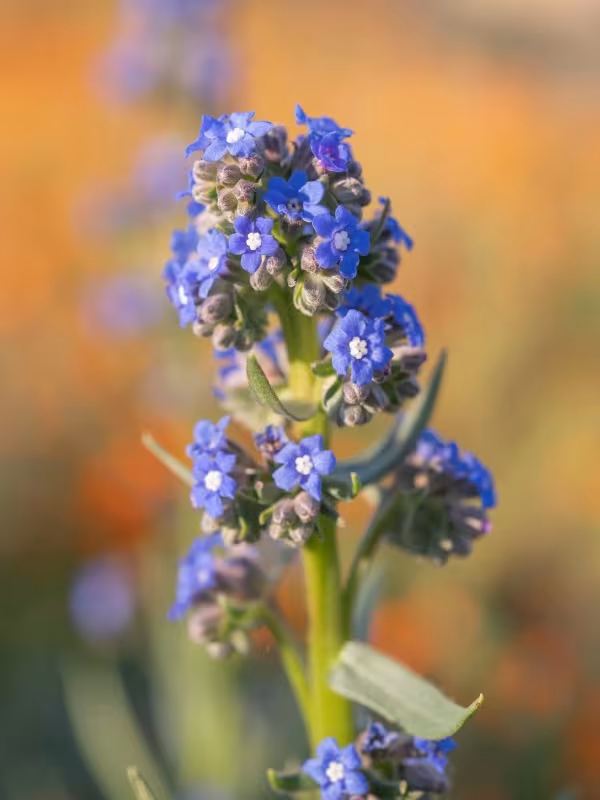
Description
Sowing dates
Cape alkanet (Anchusa capensis) is a flowering plant belonging to the Boraginaceae family, widely appreciated for its intense blue, trumpet-shaped flowers.
The seeds should be sown indoors in late winter or early spring to ensure a long flowering season, using a well-draining seed-starting mix.
When sowing outdoors, it is best to wait until all danger of frost has passed, as the seedlings are sensitive to low temperatures and wet soil conditions.
The optimal germination temperature for this species is between 18 and 22 degrees Celsius, and seeds should be lightly covered with soil or vermiculite.
Thinning the seedlings is necessary to maintain proper spacing, typically 30 cm apart, allowing the plants to develop their characteristic branching habit.
Growing requirements
Native to Southern Africa, this plant thrives in full sun and is highly adapted to bright, open environments where it can receive maximum daily light.
It prefers sandy or gritty, well-draining soil with a neutral to slightly alkaline pH; poor drainage is the primary cause of failure in cultivation.
While the species is drought-tolerant, it requires moderate watering during the initial establishment phase and throughout the peak of the flowering period.
Over-fertilization should be avoided, as an excess of nitrogen will result in lush vegetative growth at the expense of its iconic blue blooms.
Regular deadheading of spent flowers can prolong the blooming season and prevent the plant from putting its energy into seed production too early.
Main diseases and pests
The main threats to Anchusa capensis include root rot and fungal infections, which are almost always triggered by excessive soil moisture and poor drainage.
Powdery mildew can appear on the foliage if the plants are crowded or if humidity levels remain high for extended periods without proper airflow.
Aphids are the most common pests found on the plant, often clustering on the tender new growth and developing buds during the spring and early summer.
Management of these threats involves strictly controlling watering cycles, ensuring sufficient spacing for air circulation, and using horticultural soap to control aphid infestations.
Healthy plants are generally resilient, so maintaining proper environmental conditions is the most effective way to prevent the majority of common garden pests and diseases.