
Common bugloss
Anchusa officinalis L.
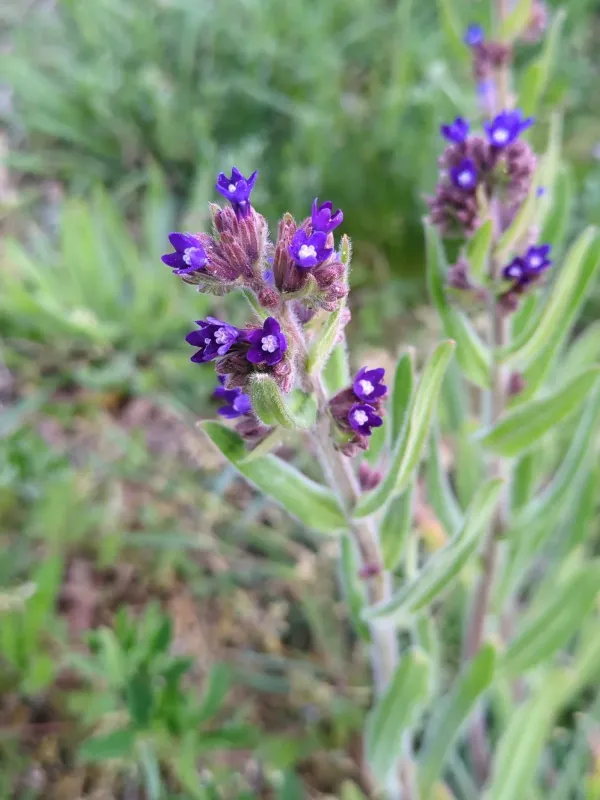
Description
Sowing dates
Anchusa officinalis is a biennial or perennial herbaceous plant belonging to the Boraginaceae family. Sowing is usually performed in the spring, during April or May, once soil temperatures reach 10-12 degrees Celsius. Dormant autumn seeding is also possible, which can promote better seed stratification.
The seeding rate is approximately 8-10 kg per hectare when using row planting. Seeds should be planted at a depth of no more than 1.5-2 cm, as they are sensitive to soil compactness and require consistent contact with moist soil to germinate effectively.
To ensure optimal plant density, row spacing should be maintained between 45-60 cm. This provides the necessary feeding area for the plant's robust basal rosette and subsequent vigorous development of flowering stems.
Seedlings typically emerge within 14-20 days after sowing, provided there is adequate moisture in the topsoil. In the first year, the crop forms a well-developed rosette, with flowering usually occurring in the second year of vegetation.
The plant exhibits strong initial growth energy; therefore, it is important to perform timely thinning of seedlings to avoid overcrowding, which can weaken the stems and reduce overall crop productivity.
Growing requirements
Anchusa officinalis is considered a low-maintenance crop, well-adapted to temperate climates. It prefers open, sunny areas, as shading leads to stem elongation and reduces the accumulation of bioactive compounds in the plant tissues.
The plant has moderate soil requirements. The best results are achieved in light, well-drained sandy loam or loam soils with a neutral to slightly alkaline pH level.
The crop is highly drought-tolerant due to its powerful root system, which penetrates deep into the soil. However, during periods of extreme drought during the budding phase, supplemental irrigation significantly increases green biomass yield.
Anchusa reacts negatively to waterlogging and high groundwater levels, which can induce root rot. Therefore, for cultivation, elevated plots or slopes should be chosen to prevent flooding from snowmelt.
The plant utilizes soil nutrient reserves efficiently, but in industrial production, it responds well to moderate applications of potassium and phosphorus fertilizers, which help strengthen cell walls.
Yield
The yield of Anchusa officinalis depends on its intended use, whether for medicinal raw materials or for seeds. On average, the yield of dry herbal material ranges from 1.5 to 2.5 tons per hectare under correct agricultural management.
The highest concentration of bioactive substances, such as allantoin and saponins, accumulates in the plant during the active flowering phase. This is the optimal period for harvesting for pharmacological purposes.
When used as a honey plant, productivity is measured by the amount of nectar produced. Depending on climatic conditions, honey yields can range from 100 to 300 kg per hectare of solid stands.
For seed production, yields typically reach 300-500 kg per hectare. Harvesting should occur when seeds turn brown, taking care to minimize losses, as the seeds are prone to shattering if allowed to over-mature.
Regular maintenance, including weed control and inter-row cultivation, allows for stable plantation productivity over 3-4 years, after which plot renewal is recommended.
Main diseases and pests
Anchusa officinalis exhibits high resistance to many common agricultural diseases. However, in conditions of high air humidity, powdery mildew may occur on the foliage.
Pests rarely cause significant damage to this crop due to the presence of stiff, bristly hairs on the leaves, which hinder insect feeding. Nevertheless, young seedlings can occasionally be damaged by flea beetles or slugs.
Root rot represents a threat only in cases of poor drainage. In waterlogged soils, pathogenic fungi can affect the root crown, leading to wilting and the death of the entire plant.
To prevent diseases, crop rotation is recommended, avoiding the placement of Anchusa after other Boraginaceae species. Timely weeding is also crucial, as weeds can act as reservoirs for various infections.
In the event of severe pest outbreaks on seed plots, authorized insecticides may be used; however, chemical treatments are discouraged on crops intended for medicinal use due to ecological and safety standards.
Harvesting
Harvesting of the aerial parts should take place during the mass flowering stage. The mown material must be dried quickly in the shade or in specialized dryers at temperatures not exceeding 40-45 degrees Celsius to preserve medicinal properties.
When harvesting seeds, a two-phase method is preferred. Plants are first mown into windrows until the seeds fully mature, then collected and threshed using combine harvesters with low drum speeds.
Care must be taken to prevent overheating during drying, as excessive heat can degrade essential oils and allantoin. Finished dry raw materials should be stored in dry, well-ventilated rooms in paper bags.
The economic utility of Anchusa extends beyond medicine, where it is valued as a mild expectorant, to the cosmetic industry and apiculture as a valuable early-summer source of nectar.
After harvest, plant residues should be shredded and incorporated into the soil as green manure, which enriches the earth with organic matter and improves the overall soil structure of the topsoil layer.