
Field borage
Anchusa arvensis (L.) M. Bieb.
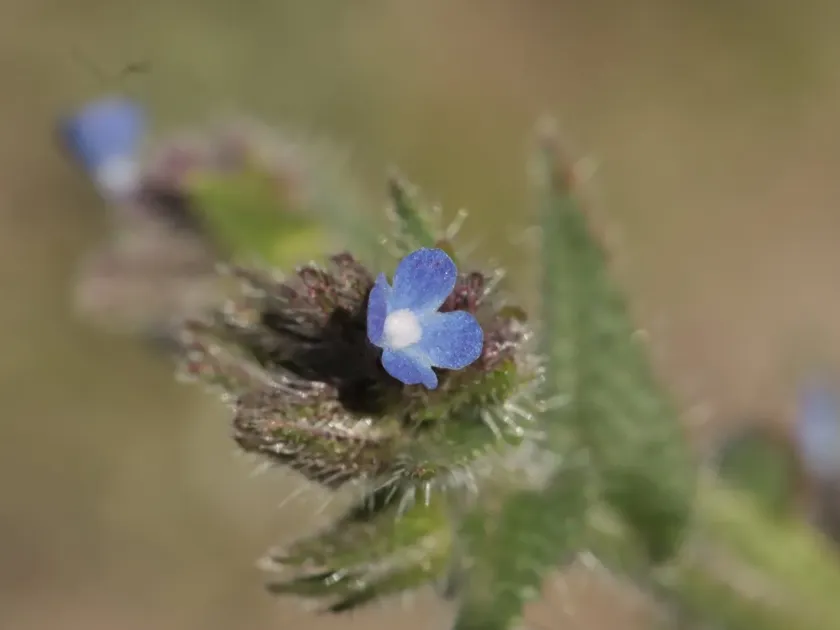
Description
Sowing dates
Field borage (Anchusa arvensis) is an annual or biennial herb that often propagates via self-seeding in agricultural landscapes. When cultivated, it is typically sown in early spring as soon as the soil temperatures rise above 10 degrees Celsius.
Seeds should be placed at a depth of approximately 1 to 2 centimeters to ensure adequate contact with moist soil. A fine seedbed preparation is recommended for achieving uniform germination across the field.
The plant demonstrates high germination vigor, which allows it to establish quickly and compete effectively in its early development stages against surrounding vegetation.
For optimal crop density, sowing rates should be adjusted to allow for significant biomass production. A population of 20 to 30 plants per square meter is usually considered ideal for specialized cultivation.
The vegetative cycle spans approximately 90 to 120 days, during which the plant forms a basal rosette followed by a central flowering stalk, making it well-adapted to short-season environments.
Growing requirements
Anchusa arvensis belongs to the Boraginaceae family. It is a heliophilous species that thrives in open, sunny locations with minimal shading from taller vegetation.
The species prefers well-drained, sandy, or loamy soil textures. It is sensitive to waterlogging, as excessive soil moisture often leads to root development issues in this particular plant.
One of the most notable features of field borage is its drought tolerance. Its stems and leaves are covered in stiff, coarse hairs that significantly reduce transpiration and protect the plant during dry spells.
It is generally adaptable to a wide range of soil pH levels, but it performs best in neutral to slightly acidic conditions where micronutrient availability is balanced.
From an agroecological perspective, the plant is valued for its ability to maintain soil structure and support diverse pollinator populations due to its long flowering period.
Yield
Field borage is widely recognized as an excellent honey plant. Its nectar production is high, making it a critical resource for bees and other beneficial insects throughout the summer months.
In terms of biomass, the plant is harvested for various purposes, including its use as a source of botanical compounds such as anthocyanins and flavonoids in herbal medicine.
While often treated as a weed, its potential for yielding biomass makes it an interesting candidate for low-input organic farming systems where green manure is prioritized.
Seed production is highly efficient, with a single mature plant capable of producing thousands of seeds, ensuring a robust replenishment of the population for the following year.
When harvesting for medicinal or technical use, the material is best collected during full bloom and dried rapidly at moderate temperatures to maintain the potency of its active constituents.
Main diseases and pests
Powdery mildew is the most common disease affecting field borage, particularly in regions with high humidity or poor air circulation within the plant canopy.
Root rot pathogens can be problematic if the soil drainage is inadequate. Managing water supply and ensuring proper soil aeration are the primary preventative measures for this issue.
Aphid infestations are the most significant pest concern, as they concentrate on tender floral buds and growing points, potentially causing stunted growth and reduced nectar yields.
Foliage-feeding insects, including certain species of weevils, can cause minor cosmetic damage, although they rarely pose a threat to the overall survival of the crop in a healthy field.
Regular scouting and integrated pest management (IPM) practices, such as encouraging natural predators, are sufficient to keep pest populations below the economic damage threshold.