
Anchusa incana
Anchusa incana Ledeb.
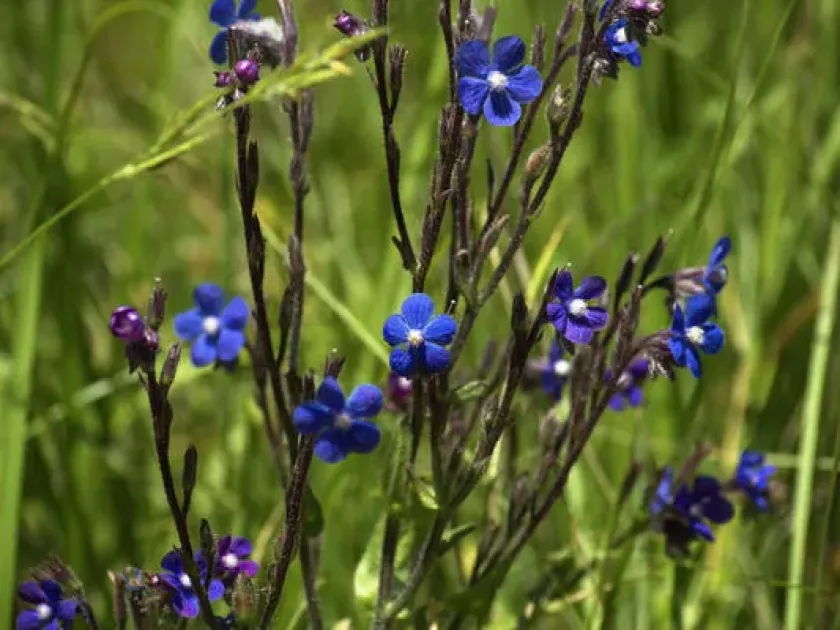
Description
Sowing dates
Sowing Anchusa incana is best performed in early spring when soil temperatures stabilize at around 10–12 degrees Celsius. It is recommended to choose a sunny location and prepare the seedbed thoroughly to ensure even germination of seeds.
The seeds should be sown at a depth of 2 to 3 centimeters to ensure they have enough contact with the soil while being protected from surface drying. Row spacing should be maintained at 40–50 centimeters to allow for optimal plant development and air circulation.
For large-scale cultivation, drilling with a standard seeder is possible, provided the seeds are cleaned and calibrated. It is essential to ensure that the soil remains moist until the emergence of seedlings to guarantee a uniform stand.
Starting the crop from seedlings in a greenhouse before the final frost date can provide a significant advantage in growth duration. Once transplanted, the seedlings should be carefully watered until their root systems are well established in the field.
Weed management during the initial stages is crucial, as the seedlings of Anchusa incana grow slowly at first. Once the plants reach the rosette stage, they become very competitive and will suppress most competing weeds.
Growing requirements
Anchusa incana, a member of the Boraginaceae family, is highly adapted to arid and semi-arid conditions. It thrives in open, sunny environments where it receives high levels of solar radiation, which is essential for its vigorous growth.
The crop prefers light, sandy, or loamy soils with excellent drainage. While it is tolerant of low-fertility soils, it responds well to moderate applications of phosphorus and potassium, which help in developing a strong root architecture.
Its primary climatic requirement is protection from prolonged waterlogging, which is the main factor that limits its cultivation range. It exhibits excellent cold hardiness, allowing it to survive harsh winters in temperate regions with proper snow cover.
As a drought-tolerant plant, it can be grown in areas where rainfall is limited. The plants utilize deep roots to reach subsoil moisture, which allows them to remain green and productive even during the peak of summer heat.
Optimal growth is observed in well-aerated soils. If the soil is heavy or compacted, it is recommended to perform deep tillage before sowing to improve aeration and prevent root health issues during rainy seasons.
Main diseases and pests
The resilience of Anchusa incana makes it a low-maintenance crop with few susceptibility issues. Its stems and leaves are covered with coarse hairs, which serve as a natural physical deterrent against many generalist insect pests.
Fungal diseases, such as powdery mildew, may occur during seasons with high humidity and poor ventilation. Proper site selection and maintaining recommended plant spacing are the most effective strategies to minimize the risk of such infections.
Root rot is rarely an issue unless the plants are grown in heavy, poorly drained soil. If drainage is improved, the risk of root-related pathogens is virtually eliminated, making it an excellent candidate for sustainable farming practices.
Pest pressure is generally very low. In rare instances, aphids may colonize the plants during rapid growth periods, but they rarely cause significant damage that would warrant the use of insecticides or chemical treatments.
Consistent monitoring and basic hygiene in the field are sufficient to maintain the health of the crop. Its robust biological constitution allows it to recover quickly from environmental stress and minor pest attacks.