
Isoetes velata
Isoetes velata
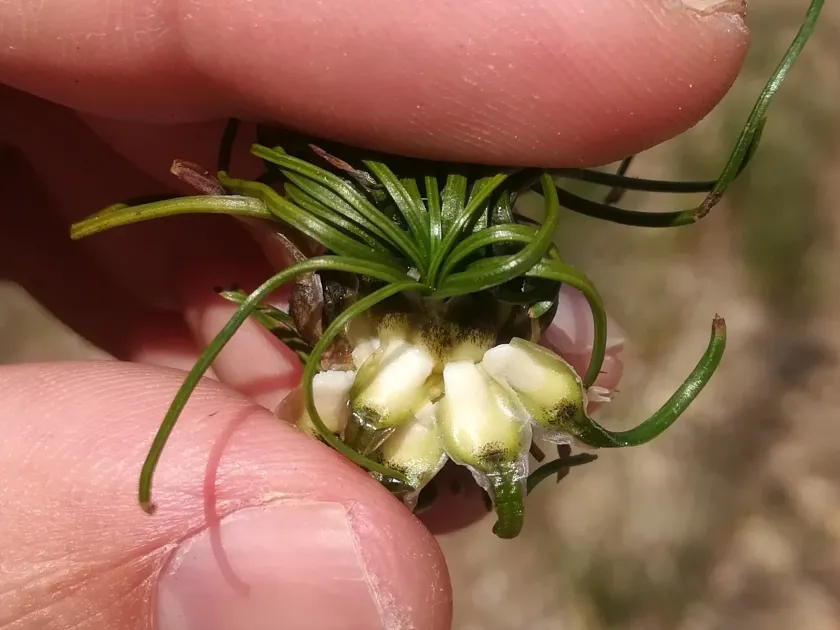
Description
Growing requirements
Isoetes velata, commonly known as a type of quillwort, is a unique member of the Isoetaceae family. This primitive spore-bearing perennial plant is evolutionary ancient, displaying a morphological structure that has remained largely unchanged over millions of years.
The native range of this species is centered around the Mediterranean basin, extending through parts of Southern Europe and Northern Africa. It typically inhabits shallow water bodies, vernal pools, or areas that experience seasonal fluctuations in water levels, allowing the plant to adapt to temporary desiccation.
Regarding habitat requirements, the species favors oligotrophic or mesotrophic waters with minimal anthropogenic interference. It is highly sensitive to water pollution and nutrient loading, making it an excellent bioindicator for identifying pristine or protected wetland ecosystems.
Botanically, it consists of a compact, corm-like stem with a tuft of stiff, quill-like leaves. At the base of these leaves are the sporangia, which contain both microspores and megaspores. The outer scales covering these reproductive organs are a distinct feature of this specific species.
In terms of human use, this plant is not an agricultural commodity but is highly valued in botanical conservation and ecological research. It is sometimes used in specialized restoration projects aimed at rehabilitating natural water bodies and maintaining local aquatic biodiversity.