
Isoetes azorica
Isoetes azorica
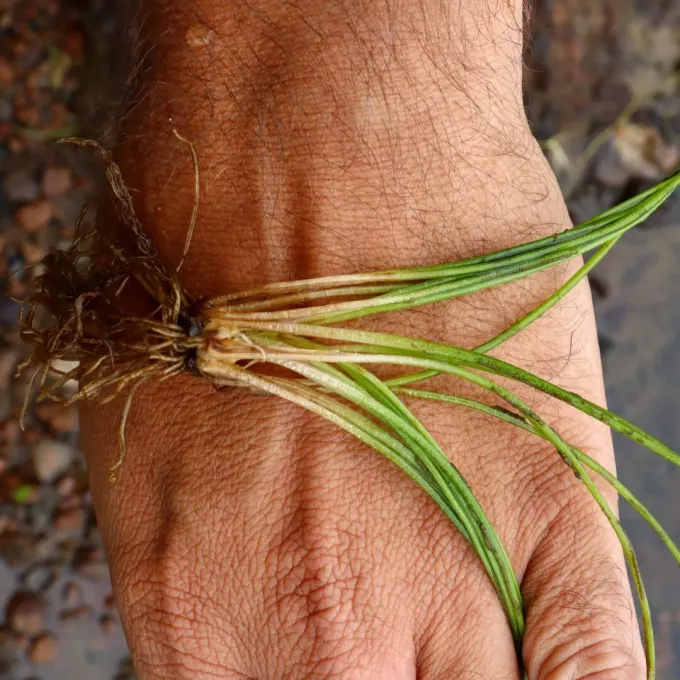
Description
Growing requirements
Isoetes azorica, commonly known as the Azores quillwort, is a rare species of lycopsid belonging to the family Isoetaceae. It is an endemic aquatic plant native specifically to the volcanic lakes of the Azores islands.
The plant grows in oligotrophic, nutrient-poor waters where it remains submerged for the majority of its life cycle. It requires clean, clear water to sustain its delicate photosynthetic processes.
Botanically, it consists of a short, fleshy stem which supports a rosette of narrow, quill-like leaves. These leaves act as the primary photosynthetic organs and also house the reproductive sporangia.
Its cultivation requirements are extremely specific, necessitating stable water temperatures and a substrate that mimics its natural volcanic lake bed conditions without excess nutrient load.
As a highly specialized aquatic organism, it serves as an indicator of environmental purity within its native range. It remains a subject of intense scientific study due to its limited distribution.
Main diseases and pests
The primary threat to the species is the degradation of its specialized habitat due to human-induced eutrophication and pollution of the volcanic lakes.
Invasive plant species can easily outcompete the quillwort for space and nutrients, leading to a significant decline in the population density of the native species.
Climate change poses a long-term risk, as altered precipitation patterns may cause critical fluctuations in lake levels, drying out the littoral zones where the plant thrives.
Recreational activities such as swimming or the use of motorized watercraft can physically damage the delicate sporophytes and stir up sediment, reducing light penetration.
Diseases affecting aquatic flora, often introduced by contaminated equipment or wildlife, can cause widespread damage to isolated populations of this vulnerable fern.