
Drummond's quillwort
Isoetes drummondii
Description
Growing requirements
Drummond's quillwort is a perennial spore-bearing plant classified within the Isoetaceae family. It is a rare species native to Australia and is primarily of botanical interest rather than agricultural production.
The plant is uniquely adapted to ephemeral wetlands and seasonal pools that undergo cycles of drying and flooding. It requires specific hydration patterns to complete its reproductive cycle effectively.
In terms of soil requirements, it prefers sandy or silty substrates that can hold moisture while remaining relatively low in salinity. The nutrient concentration in the water must be balanced for survival.
The climatic preferences are tied to the Mediterranean-style climate found in parts of Australia. It relies heavily on seasonal precipitation to create the micro-habitats necessary for its vegetative growth.
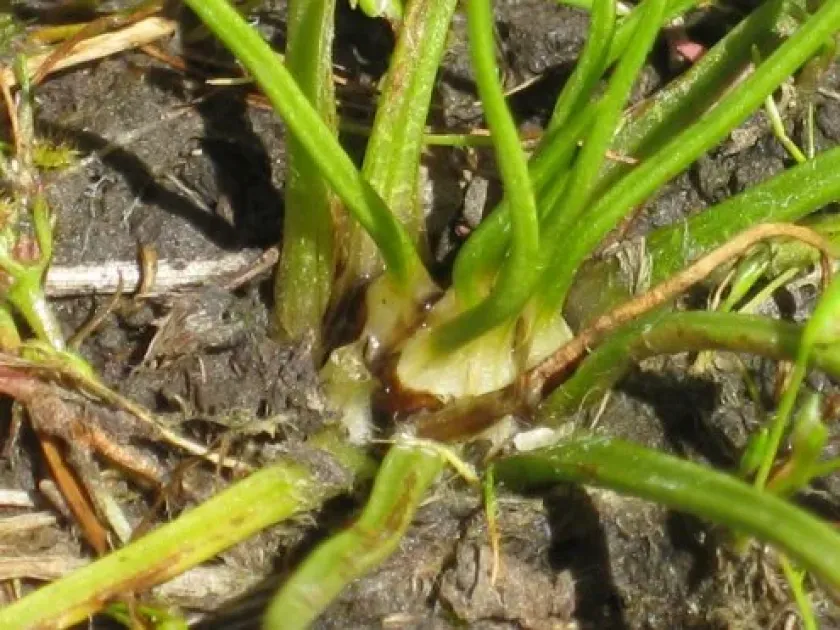
The physical structure consists of a corm-like stem with rosette-forming linear leaves. Reproductive structures, or sporangia, are located at the leaf bases and release spores when the conditions are wet enough.
Main diseases and pests
The primary threats to Drummond's quillwort involve the loss of ephemeral water habitats due to land drainage and conversion for agricultural expansion. Such activities fundamentally alter the landscape.
Overgrazing by livestock in areas where this species grows causes soil compaction and direct physical destruction of the plants. This prevents the species from effectively replenishing its soil seed bank.
Water quality degradation is another critical issue, as runoff containing fertilizers and herbicides from surrounding farmlands can disrupt the sensitive chemical balance needed by the quillwort.
Invasive species often outcompete Drummond's quillwort for space and light during the brief growing seasons. These competitive pressures make it difficult for the species to maintain stable populations.
As this plant is not an agricultural crop, there are no commercial agronomic treatments for pests or diseases. Conservation efforts remain focused on protecting the integrity of its native wetlands.