
Isoetes subinermis
Isoetes subinermis
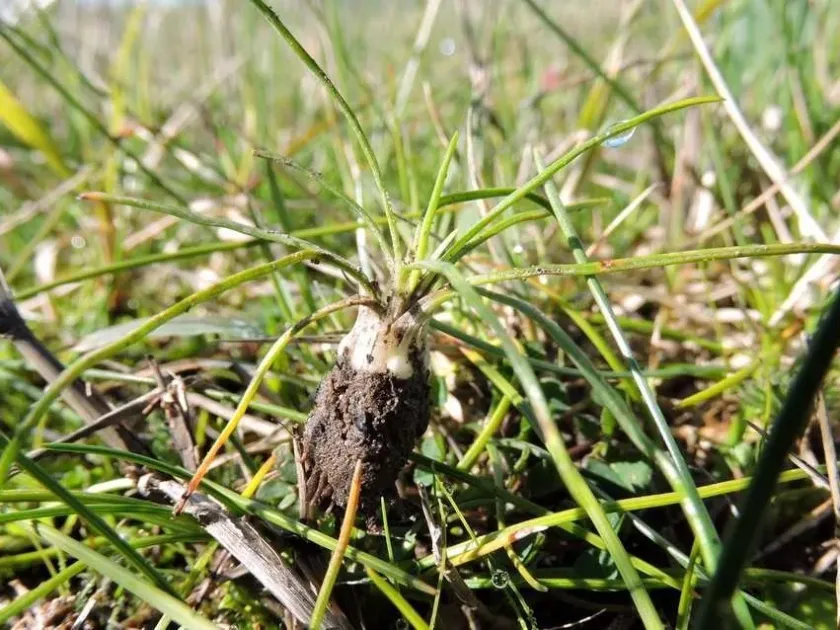
Description
Growing requirements
Isoetes subinermis belongs to the Isoetaceae family and is a specialized aquatic perennial plant. It represents a primitive group of spore-bearing plants that have adapted to live submerged in shallow freshwater environments.
The plant typically thrives in mountain lakes and ponds, where it is found on sandy or gravelly substrates. It is a highly sensitive species, requiring stable, clean, and oligotrophic water conditions to maintain healthy growth cycles throughout the year.
Regarding soil requirements, the species prefers fine mineral substrates. The physical properties of the bottom sediment are crucial for the root system, which performs both anchorage and nutrient absorption in water-saturated environments.
Climatic factors are strictly dictated by the altitude and the thermal regime of the water bodies. The plant requires cool, well-oxygenated water, as temperature fluctuations and low oxygen levels significantly hinder its metabolic activities and reproductive success.
Botanically, the plant is characterized by a corm-like underground stem and a cluster of stiff, quill-like leaves. Its simple internal structure lacks vascular complexity compared to higher plants, making it a valuable subject for evolutionary biology research.
Main diseases and pests
The primary threat to Isoetes subinermis is environmental degradation, specifically water pollution caused by agricultural runoff. Increased nitrogen and phosphorus levels promote algal blooms that physically and chemically displace this sensitive species.
Pests such as aquatic gastropods and various insect larvae can cause mechanical damage to the sporangia. However, these are minor compared to the severe impact of physical habitat destruction and the introduction of invasive non-native aquatic vegetation.
Diseases are mostly secondary to poor environmental quality. When the substrate becomes anaerobic or highly polluted, the root system is prone to necrotic decay, which quickly leads to the death of the entire plant specimen.
Climate change poses a long-term risk, particularly through the reduction of water levels in alpine basins. The loss of consistent water cover is detrimental, as the species lacks the physiological ability to survive in terrestrial or dehydrated conditions.
Currently, there is no commercial cultivation of this plant. Its management is focused entirely on conservation efforts and the protection of its natural habitats from any anthropogenic interference, ensuring that its populations remain stable in the wild.