
Quillwort
Isoetes lacustris
Description
Growing requirements
The quillwort (Isoetes lacustris) is a perennial, spore-bearing aquatic plant belonging to the Isoetaceae family. It is considered a relict species, maintaining evolutionary links to the ancient flora that inhabited the Earth in the distant past.
The distribution of this species spans the temperate and subarctic regions of the Northern Hemisphere, particularly in parts of Europe and North America. It is typically found in oligotrophic lakes, which are characterized by low nutrient levels and high water clarity.
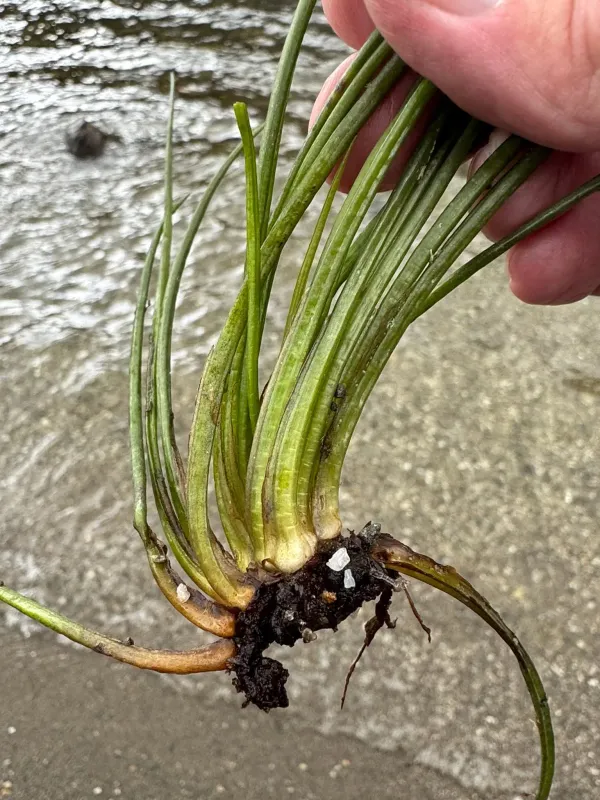
Morphologically, the plant appears as a rosette of linear, stiff, needle-like leaves emerging from a bulbous rootstock. These leaves contain air-conducting tissues, allowing the plant to exchange gases while submerged, which is an adaptation to low-oxygen environments.
The growth requirements are very specific: it thrives in clear water, generally at depths ranging from 0.5 to 3 meters, and prefers substrate composed of sand, gravel, or rocky debris. It acts as a bio-indicator for pristine aquatic ecosystems.
It is not cultivated as an agricultural crop. Instead, this species is strictly protected in many regions due to its rarity. Research primarily focuses on its ecological role, conservation biology, and its potential use in restoring the health of aquatic ecosystems.
Main diseases and pests
The primary threat to the quillwort is eutrophication. Increased input of phosphorus and nitrogen into water bodies leads to algal blooms, which shade out the submerged plants and reduce the water quality necessary for their survival.
Changes in water chemistry, specifically shifts in pH levels and the accumulation of pollutants, pose a significant risk to the plant's delicate root systems. Acidification or heavy metal contamination can effectively wipe out entire colonies.
Physical disturbances, such as dredging, boat anchoring, and heavy recreational water activities, destroy the substrate and cause direct mortality. The species is highly sensitive to sediment turbidity, which limits its photosynthetic capacity.
Climate change, manifesting as rising water temperatures, impacts the metabolic processes of the quillwort. Many lakes are warming too quickly for these cold-adapted species to adjust, potentially leading to local extinction.
Invasive non-native aquatic plants also compete for space and nutrients. Because the quillwort has a very slow growth rate, it is often outcompeted by more aggressive species in ecosystems undergoing environmental change.