
Isodon japonicus
Isodon japonicus
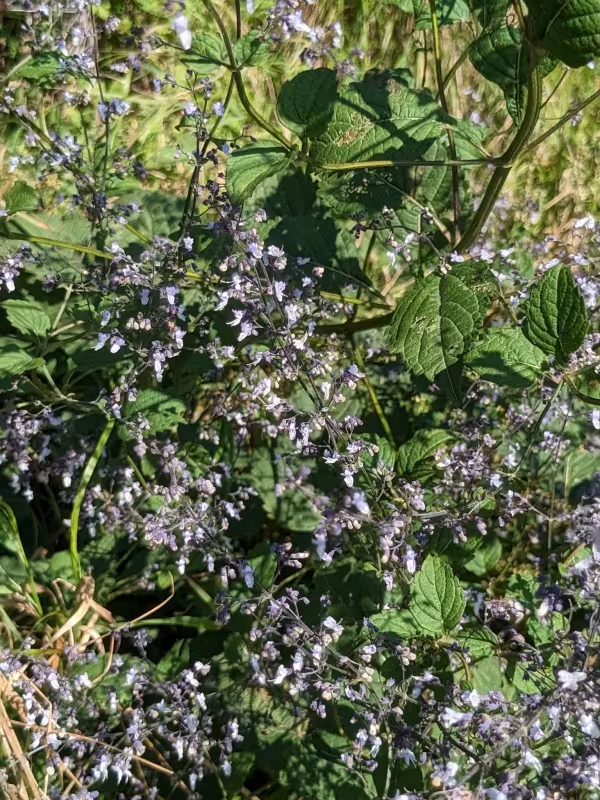
Description
Sowing dates
Sowing of Isodon japonicus usually takes place in the spring, once the soil has warmed to a temperature of 12–15 degrees Celsius. The optimal timing is considered mid-April to early May, allowing plants to establish strong root systems before the onset of intense summer heat.
For direct seeding in open fields, seeds should be sown at a depth of approximately 0.5–1 cm. In commercial operations, starting seedlings in greenhouses is often preferred, as it results in more robust planting material with well-developed root structures.
The sowing density must account for the plant's active branching habit. It is recommended to maintain a distance of at least 30–40 cm between plants within rows, with row spacing up to 60 cm to facilitate maintenance and mechanical harvesting.
The seeds exhibit high germination energy but require consistent soil moisture during the initial stages. Seedlings typically emerge uniformly within 14–20 days, provided that temperature regimes are managed and the topsoil does not dry out.
For late-autumn sowing, seeds can be planted in late October to undergo natural winter stratification, which often enhances germination percentages in the following spring season.
Growing requirements
Isodon japonicus belongs to the Lamiaceae family and is a perennial herbaceous plant with high ecological adaptability. For optimal growth, the crop requires bright light, though it can tolerate partial shade during the peak heat of the day.
The best development is observed in loose, well-drained loamy or sandy soils with a neutral or slightly acidic pH. It is crucial to avoid areas with waterlogging, as the root system is highly sensitive to excess moisture and prone to rotting.
During the active growing season, the crop requires regular irrigation, especially during phases of intense biomass accumulation. The plant responds well to organic and balanced mineral fertilization, which promotes the synthesis of bioactive compounds.
The crop displays moderate cold tolerance. In regions with harsh winters and minimal snow cover, it is recommended to mulch the rhizomes with peat, wood chips, or straw to prevent frost damage and ensure survival for the next season.
The plant is successfully cultivated within its natural range of East Asia, including Japan, China, and Korea. It prefers climates with moderate summer rainfall and a sufficiently long growing season.
Yield
The yield of the Isodon japonicus aerial parts depends on the intensity of agronomic practices, including regular weeding, cultivation, and fertilization. With proper care, producers can harvest up to 2–3 tons of dry plant material per hectare.
The maximum output of bioactive substances is achieved by harvesting the plant during the peak flowering stage. At this time, the concentration of therapeutic components in the leaves and stems reaches its peak, which is critical for pharmaceutical applications.
The second year of the plant's life is usually characterized by significantly higher productivity compared to the first year. This is due to the formation of a robust root system and the development of a broad bush capable of producing numerous shoots.
To increase commercial yield, topping techniques are applied, such as pinching the growing tips of the shoots. This stimulates branching and increases total leaf surface area, which is the primary component for harvesting.
Storage of the harvested material requires strict adherence to temperature and humidity controls. Using modern industrial drying facilities ensures the preservation of essential oils and other volatile compounds that define the plant's value.
Main diseases and pests
Isodon japonicus is a relatively resilient plant; however, improper agronomic practices can lead to diseases typical of the Lamiaceae family. The most dangerous are root rots, which occur due to excessive irrigation and inadequate soil drainage.
Powdery mildew may affect the foliage under conditions of high humidity and poor air circulation. Regular weeding and maintaining sufficient spacing between bushes are the best preventive measures to stop the spread of fungal spores within the crop.
Among pests, aphids are frequently observed, as they feed on the sap of young shoots, weakening the plant. In cases of severe infestation, the use of biological insecticides or botanical extracts is recommended to avoid chemical residues in plant tissues.
Slugs and snails can cause mechanical damage to young leaves, especially during rainy weather. Mitigation strategies include mechanical removal, physical barriers, or the use of approved molluscicides around the beds.
Integrated crop protection involves strict crop rotation. It is not advised to plant Isodon in fields previously used for other Lamiaceae species to prevent the buildup of soil-borne pathogens specific to the family.
Harvesting
The primary harvest target is the aerial part of the plant (the herb), which is used in pharmacopoeia. Harvesting should be done in dry weather, cutting the stems at a height of 5–10 cm from the ground to prevent damage to the rhizome and allow for regeneration.
Harvest timing is determined by the flowering phase, which usually occurs in late summer or early autumn. At this moment, the chemical composition of the plant is most balanced and rich in useful compounds such as diterpenoids and flavonoids.
After cutting, the material must be promptly moved to a drying facility. It is important to avoid overheating and exposure to direct sunlight, as these factors can lead to the loss of valuable aromatic oils and discoloration of the raw material.
Drying is carried out at temperatures between 35–40 degrees Celsius in well-ventilated, shaded rooms or industrial chamber dryers. The process is complete when the stems become brittle enough to snap when bent.
For industrial use, the dried material is milled and packed in paper bags or specialized containers that prevent moisture and dust penetration. Properly processed Isodon retains its efficacy for 1–2 years when stored in a cool, dry place.