
Candytuft
Iberis sempervirens L.
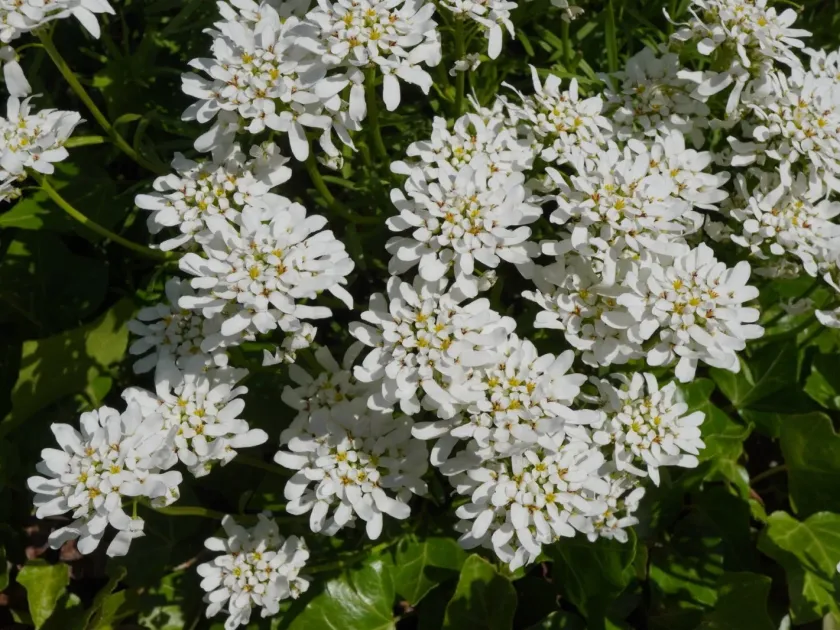
Description
Sowing dates
Candytuft is typically propagated by seeds, stem cuttings, or by dividing established clumps. Sowing seeds directly into the soil is best done in autumn or early spring, as the seeds require a period of cooler temperatures to germinate successfully.
When starting indoors, seeds should be sown in trays in late winter and kept in a cool environment. Seedlings are delicate and should be carefully transplanted into individual pots once they have developed a set of true leaves.
Stem cuttings are the preferred method for propagating specific cultivars to ensure uniformity. Cuttings should be taken in early summer and placed in a well-draining rooting medium under mist or plastic covers.
Division of mature plants is recommended every three to four years to maintain plant vigor. This process should be carried out in spring or autumn, ensuring that each division has a healthy section of the root system.
When planting in the garden, spacing is critical for health. Space plants about 30 to 45 centimeters apart to allow for proper airflow and to prevent overcrowding as the plants spread outwards.
Growing requirements
Iberis sempervirens, a member of the Brassicaceae family, is a hardy perennial native to Southern Europe. It is highly valued in horticulture for its dense, evergreen foliage and showy white flower clusters.
The plant thrives in full sun, though it can tolerate partial shade in warmer climates. It is best suited for rock gardens, borders, and slopes where its trailing habit can be fully displayed.
Soil requirements focus on excellent drainage. Candytuft performs best in rocky, sandy, or neutral to slightly alkaline soils. It will struggle significantly in heavy, waterlogged clay, which often leads to root rot.
Maintenance involves minimal irrigation; the plant is drought-tolerant once established. It rarely requires supplemental fertilization, although a light application of balanced fertilizer in early spring can boost flowering.
A key maintenance task is pruning. Cutting back the stems by about one-third after the main flush of blooms ensures the plant remains compact and encourages a potential second, smaller round of flowering.
Main diseases and pests
The most common disease affecting Candytuft is root rot, caused by excessive moisture or poor drainage. This condition is often fatal, so prevention through proper site selection is essential for long-term health.
Fungal issues like powdery mildew can develop if the plant is grown in areas with poor air circulation or high humidity. Managing the density of the planting is the most effective preventative measure.
Crucifer flea beetles are the primary insect pests, known for creating tiny holes in the leaves. These can be managed with organic insecticidal soaps or systemic pesticides if an infestation occurs.
Aphids may occasionally appear on new, succulent growth during the peak of spring. They should be addressed quickly with targeted treatments to prevent damage to the flower buds.
Slugs and snails can also damage the foliage, particularly in damp garden environments. Using physical barriers like gravel or copper tape around the base of the plants provides an effective defense.