
Iberis carnosa
Iberis carnosa Willd.
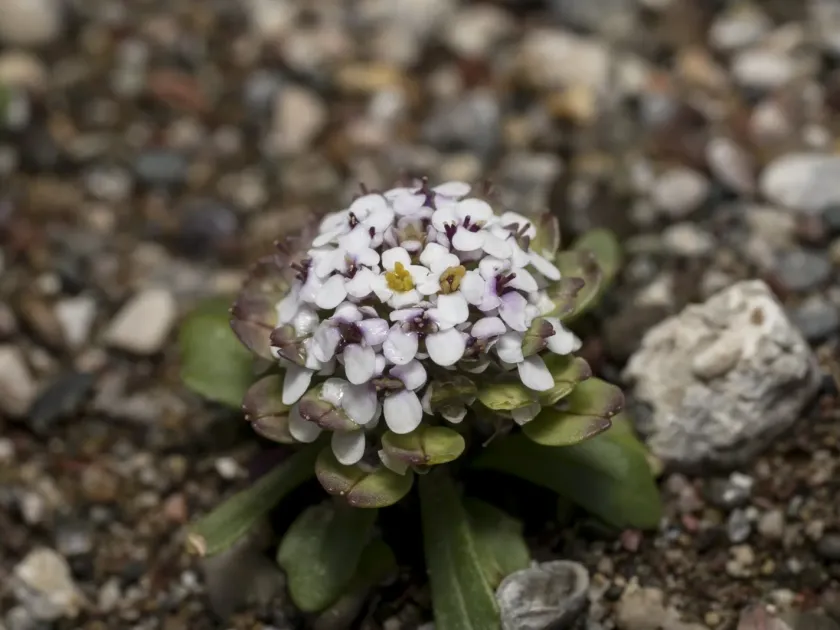
Description
Sowing dates
Sowing Iberis carnosa is typically done in the spring once the risk of severe frost has passed. Seeds demonstrate optimal germination rates when kept in a stable environment with temperatures between 15 and 18 degrees Celsius.
Seeds should be covered with a very thin layer of substrate, no more than 0.5 to 1 centimeter deep. Maintaining consistent moisture is critical during the first few weeks, as young seedlings are susceptible to desiccation.
For indoor propagation, sowing in late winter allows for stronger root development before transplanting into the field. Utilizing well-draining seed starting mix prevents premature damping-off, a common issue in propagation.
Transplanting seedlings to their permanent outdoor location occurs in late May. Proper spacing, generally 20–30 centimeters apart, is essential to ensure adequate airflow and prevent the accumulation of humidity around the plant base.
Direct sowing into the soil is also possible in early autumn in warmer climates, allowing the seeds to undergo natural stratification, which can improve germination vigor during the following spring season.
Growing requirements
Iberis carnosa is a member of the Brassicaceae family, well-adapted to rocky and alpine environments. Its biological structure allows it to thrive in nutrient-poor but well-aerated substrates typical of mountainous regions.
The crop requires soils with excellent drainage, preferably limestone-based or neutral. Soil compaction must be avoided at all costs, as the roots are highly sensitive to low oxygen availability caused by waterlogging.
This plant is a heliophyte, meaning it has an absolute requirement for bright, direct sunlight to achieve full flowering potential. In regions with intense heat, partial shade during the peak afternoon hours is beneficial.
Maintenance involves minimal irrigation, as the plant possesses succulent-like foliage that can store water during brief dry spells. Over-fertilization, especially with nitrogen, should be strictly avoided to prevent leggy growth.
- Soil Type: Well-drained, stony, slightly alkaline
- Moisture: Low to moderate, avoid water saturation
- Environment: Open, sunny exposure with good air circulation
Main diseases and pests
The primary threats to Iberis carnosa are soil-borne pathogens and root rot, which are triggered by stagnant water and poor soil drainage. Maintaining a dry crown area is essential for disease prevention.
Crucifer flea beetles are the most significant insect pest for this species. These beetles feed on the leaves, creating small, circular holes that weaken the plant's overall health and vigor during the early growth stages.
Aphids may occasionally infest the developing flower spikes, sucking nutrients and potentially transmitting viral diseases. Early detection through regular monitoring is the most effective way to manage these populations.
Fungal diseases like powdery mildew can develop in environments with high humidity and stagnant air. Cultural control, such as proper plant spacing and removal of debris, serves as the first line of defense.
Integrated pest management strategies are recommended, focusing on maintaining plant health through proper site selection and avoiding excessive overhead irrigation which promotes the development of moisture-dependent pathogens.