
Hymenophyllum umbratile
Hymenophyllum umbratile
Description
Growing requirements
Hymenophyllum umbratile is a delicate epiphytic fern species belonging to the Hymenophyllaceae family. Naturally occurring in humid, shaded tropical environments, this plant serves as an indicator of a highly stable and moist microclimate, where it thrives on moisture-retaining substrates.
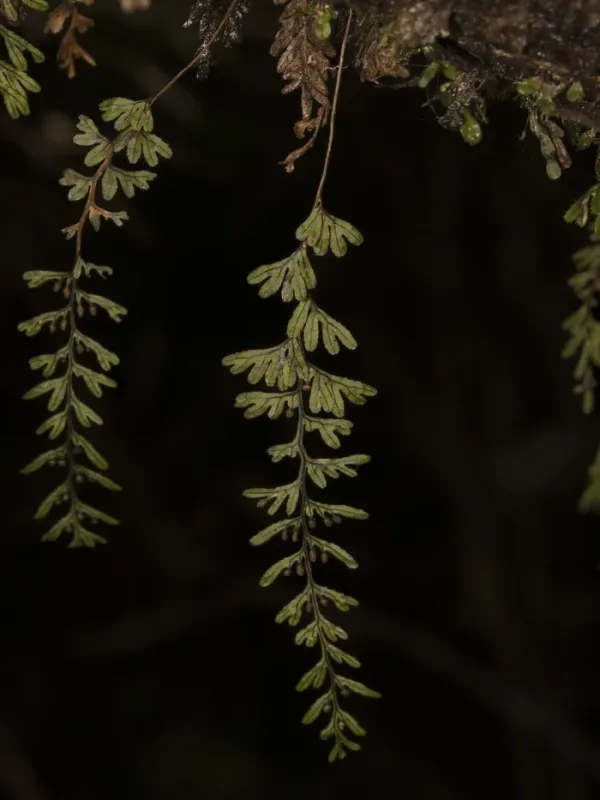
The botanical structure of this fern is characterized by extremely thin, translucent fronds that are often only one cell layer thick. This unique anatomy makes the plant highly efficient at absorbing ambient moisture but renders it extremely vulnerable to desiccation if the surrounding air humidity drops.
Cultivation requires specialized substrates, typically a blend of sphagnum moss, orchid bark, and inert additives to ensure aeration. The growing medium must remain consistently moist but never waterlogged to prevent root decay, which is the most common failure in domestic fern management.
Environmental conditions must mimic a sheltered woodland understory. This includes indirect, low-intensity lighting and a consistent temperature range between 18 and 24 degrees Celsius. Avoid placing the plant near heat sources or ventilation outlets that could drastically reduce local humidity levels.
In terms of economic and horticultural use, this species is primarily cultivated by private collectors and botanical institutions. Due to its rigid requirements, it is not suitable for mass commercial production but remains a prized specimen for those capable of maintaining professional-grade terrariums.
Main diseases and pests
The primary threats include spider mites, which can quickly devastate the thin fronds in low-humidity environments. Additionally, the plant is susceptible to various fungal pathogens that flourish if the substrate lacks proper drainage or if there is stagnant water sitting on the foliage.