
Javanese filmy fern
Hymenophyllum javanicum
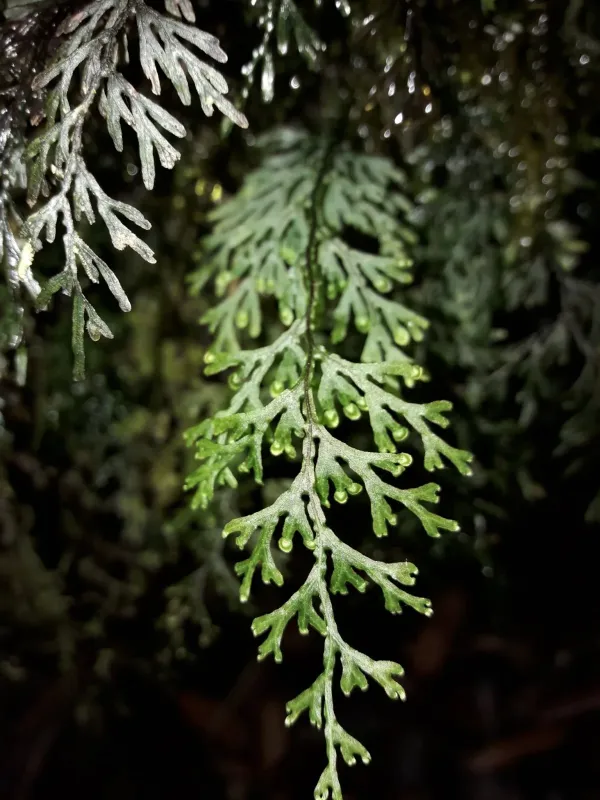
Description
Growing requirements
Hymenophyllum javanicum, commonly known as the Javanese filmy fern, is a captivating species belonging to the Hymenophyllaceae family. Naturally occurring in the humid, shaded environments of the Indonesian archipelago, it is an epiphyte that thrives on tree trunks and moist rock faces.
The plant is distinguished by its remarkably thin, translucent fronds, which are typically only one cell layer thick. This structural characteristic makes the species highly dependent on high atmospheric humidity, as the tissues can dehydrate rapidly in standard room conditions.
Successful cultivation requires a stable microclimate, typically provided by terrariums, Wardian cases, or specialized orchid houses. Consistent temperatures and indirect, diffuse lighting are essential to maintain the structural integrity of the delicate fronds.
The growing medium should prioritize aeration and moisture retention. A mix of chopped sphagnum moss, orchid bark, and inert substrates is ideal. The roots should be kept moist but must have access to oxygen to prevent root rot, a common failure point for this crop.
While Hymenophyllum javanicum is not an agricultural crop in the traditional sense, it is a specialized ornamental plant highly valued in the botanical hobbyist community for its ethereal beauty and challenge in cultivation.
Main diseases and pests
The primary biological threat to the Javanese filmy fern is fungal infection and bacterial rot, often triggered by stagnant, overly wet conditions. Improving airflow is the most effective preventative measure against these pathogens in controlled environments.
Pests such as spider mites can cause significant damage if the humidity drops below optimal thresholds for extended periods. Given the plant's delicate nature, mechanical removal or biological controls are preferred over heavy chemical interventions.