
Hymenophyllum maderense
Hymenophyllum maderense
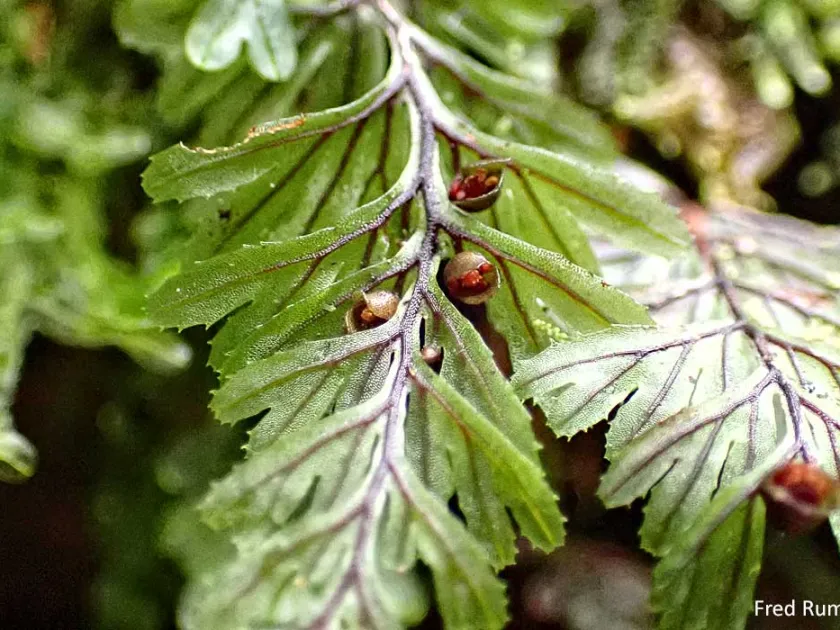
Description
Growing requirements
Hymenophyllum maderense is a rare species of epiphytic or lithophytic fern belonging to the Hymenophyllaceae family. In the wild, this species is endemic to the humid forests of the Madeira archipelago, where the climate is characterized by constant high humidity and an absence of sharp temperature fluctuations.
The plant possesses distinct botanical features, most notably its extremely thin, translucent fronds consisting of a single layer of cells. This anatomy makes the culture highly sensitive to air humidity levels, which must be close to 100%, effectively limiting its cultivation to specialized greenhouse or terrarium environments.
To thrive, this fern requires consistently cool conditions that mimic its native foggy woodland microclimate. The growing medium must be loose and airy, typically consisting of a mix of shredded sphagnum moss, charcoal, and peat-based substrate, ensuring excellent aeration for the root system.
Agronomic management relies heavily on protection from direct sunlight, as the delicate fronds are highly prone to tissue burning. The best practice is to house the plant in shaded conditions or within closed vivariums where evaporation and microclimate can be strictly controlled by the grower.
While this species holds no traditional agricultural value, it is of immense interest to botanical gardens and conservationists. Its primary utility lies in scientific research and the specialized cultivation of rare, relict plant species within high-end ornamental plant collections.
Main diseases and pests
The main threats to Hymenophyllum maderense include fungal infections that develop rapidly under conditions of stagnant water and poor air circulation. High humidity combined with elevated temperatures creates an ideal environment for various plant pathogens to take hold.
Among pests, microscopic mites and thrips pose the greatest danger to the foliage, often causing irreparable damage to the thin, single-layered leaves. Because of the plant's unique physiology, many standard pesticides are contraindicated, as they are likely to cause immediate chemical tissue necrosis.