
Hymenophyllum flabellatum
Hymenophyllum flabellatum
Description
Growing requirements
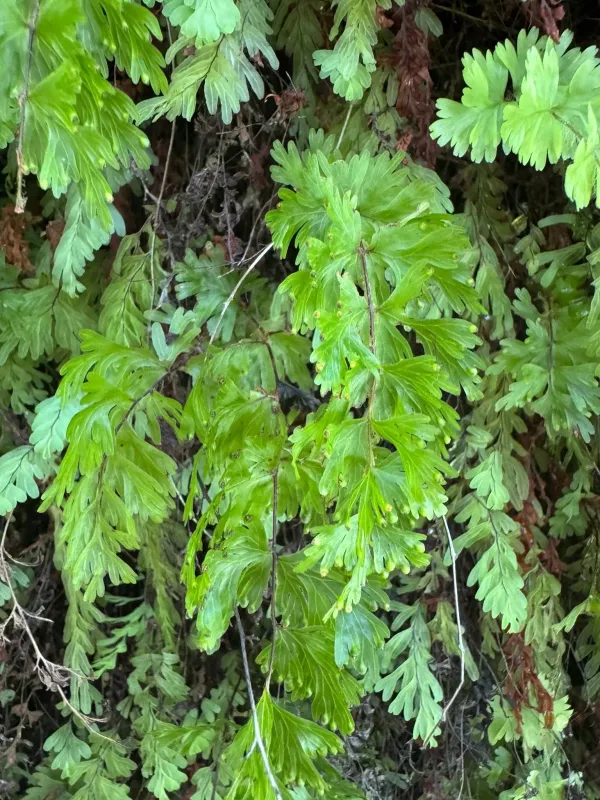
Hymenophyllum flabellatum, commonly known as the fan-shaped filmy fern, belongs to the Hymenophyllaceae family. This species is native to tropical and temperate rainforests in Australia, New Zealand, and the Pacific Islands, where it thrives in deep shade and constant moisture.
The botanical highlight of this plant is its delicate, translucent fronds that are only a single cell thick. This unique morphology makes the plant highly dependent on a saturated atmospheric environment, typically requiring a terrarium or high-humidity greenhouse to survive in a controlled setting.
The plant grows as an epiphyte or lithophyte, which dictates its soil requirements. It prefers a substrate consisting of long-fiber sphagnum moss and minimal organic additives. The soil must remain consistently damp but never waterlogged to ensure the health of the sensitive, thread-like rhizomes.
Temperature management is critical for success with Hymenophyllum flabellatum. It prefers a cool to moderate environment between 15 and 22 degrees Celsius. Extreme heat or sudden shifts in ambient temperature often trigger a stress response, leading to rapid wilting.
Regarding light, this fern demands low-intensity, filtered light. Exposure to direct sunlight will cause severe scorch to the sensitive blades, leading to rapid desiccation. A north-facing window or specialized LED grow lights with low PAR values are usually the best options for indoor cultivation.
Main diseases and pests
The primary threat to Hymenophyllum flabellatum is dehydration. Due to the lack of a cuticle on the fronds, moisture loss is rapid and often irreversible, making humidity control the single most important factor in the plant's survival.
Pathogenic fungi and mold represent the secondary threat, often emerging when air circulation within a closed container is insufficient. Maintaining a slight airflow while keeping high humidity is the key technical challenge for the grower.
Pests like mealybugs and spider mites can infest the fronds. However, standard chemical treatments are often too harsh for the species, requiring manual removal or biological control agents like predatory mites if an infestation occurs.
Mineral accumulation from fertilizers or water with high total dissolved solids (TDS) can lead to toxic buildup in the substrate. Only distilled, reverse osmosis, or clean rainwater should be used for irrigation to preserve the plant's delicate vascular tissue.
Ultimately, this species is considered a niche ornamental crop. Its use is almost exclusively limited to botanical exhibits and advanced private collections due to the high maintenance and stringent environmental requirements for its long-term health.