
Tunbridge filmy fern
Hymenophyllum tunbrigense
Description
Growing requirements
The Tunbridge filmy fern (Hymenophyllum tunbrigense) is a delicate species of fern within the Hymenophyllaceae family. In a controlled horticultural environment, it is highly valued as an indicator species for pristine moisture conditions, often grown in specialized terrariums or protected greenhouses.
Originating from the Atlantic regions of Europe, the species is naturally adapted to cool, misty environments. Its geographical range stretches across areas with high annual precipitation and consistent humidity levels, making it a challenging plant to propagate in standard agricultural settings.
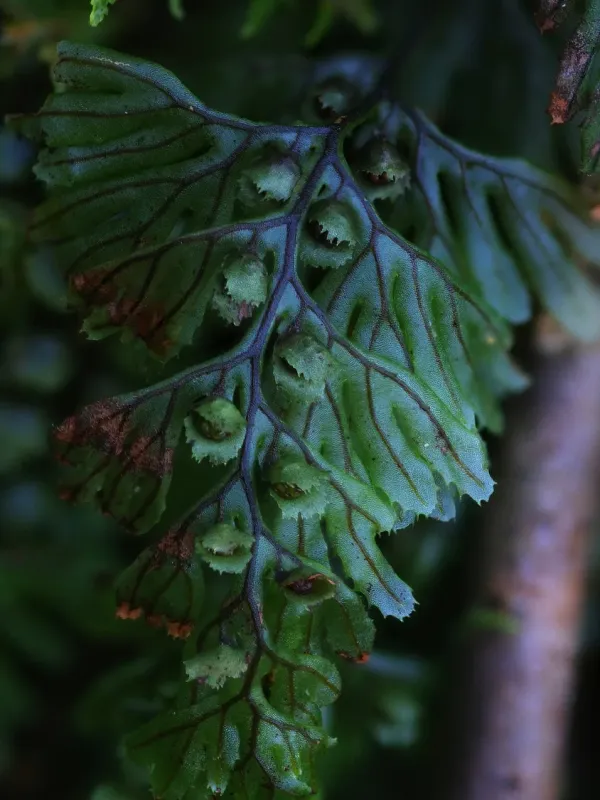
The botanical structure of this fern is exceptionally refined; its fronds are only one cell thick, resembling a thin, translucent membrane. It lacks the waxy cuticle found in most land plants, which is why it is strictly restricted to humid microhabitats where transpirational stress is absent.
Cultivation success depends on the substrate composition, which must be acidic, well-draining, and rich in organic matter such as sphagnum moss or shredded bark. The root system is vestigial, meaning the plant relies heavily on atmospheric moisture rather than soil nutrients for survival.
Maintenance requires high-frequency misting or an automated fogging system to maintain relative humidity consistently above 85%. Temperature regulation is equally vital, as the species thrives in cool conditions and fails to survive in temperatures exceeding 20°C for extended periods.
Main diseases and pests
The primary threats to Hymenophyllum tunbrigense are fungal pathogens, specifically those causing rhizome rot in poorly ventilated spaces. Waterlogging the substrate almost invariably leads to the rapid death of the colony due to the lack of oxygen for the root system.
Pests are generally limited, but aphid infestations can cause structural damage to the tender new growth. Because the plant is extremely sensitive to chemical interference, any pest control must be carried out with extreme caution, often manually or using highly diluted biological soaps.