
Kidney fern
Hymenophyllum nephrophyllum
Description
Growing requirements
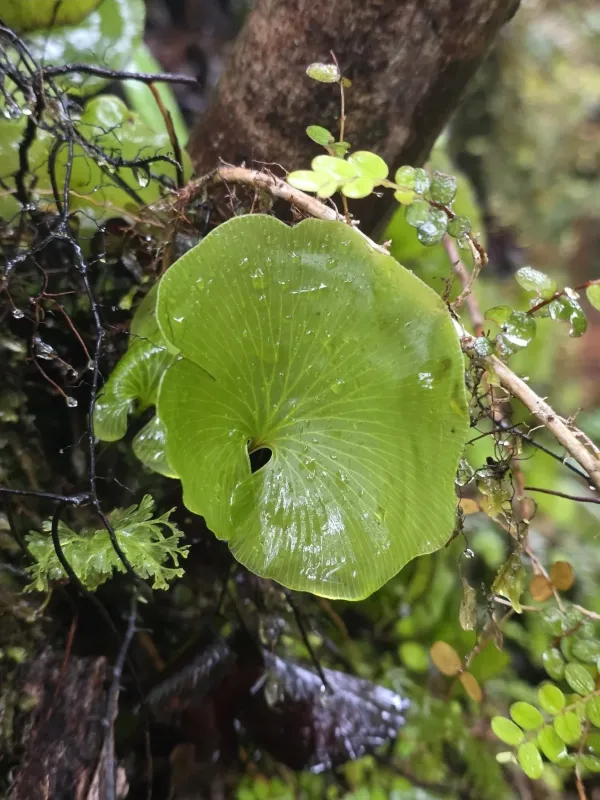
The kidney fern (Hymenophyllum nephrophyllum) is a member of the Hymenophyllaceae family. Native to New Zealand, this species is highly valued for its distinctive kidney-shaped fronds that feature a delicate, translucent texture.
Unlike standard agricultural crops, this fern grows primarily in hyper-humid environments. In cultivation, it is best suited for terrariums or specialized greenhouse setups where the atmospheric moisture level can be strictly maintained above 80%.
The substrate requirement for this plant includes a highly porous, moisture-retaining mixture such as peat moss, fern fiber, and pine bark. It requires a neutral to slightly acidic medium that mimics its natural epilithic or epiphytic habitat.
Light intensity should be kept very low, mimicking the deep shade of a rainforest floor. High exposure to direct light causes the chlorophyll to break down and leads to rapid desiccation of the plant's delicate tissues.
Temperature management is critical for the success of this crop. The plants thrive in cool to moderate temperatures, ideally between 16 and 21 degrees Celsius, and are highly intolerant of heat waves or wide diurnal fluctuations.
Main diseases and pests
Dehydration is the primary threat to the kidney fern. Even short periods of low humidity can cause irreversible damage to the fronds, which are only one cell layer thick in many parts, making them extremely vulnerable.
Fungal infections and pathogens are common if the plant is kept in stagnant air. Ensuring adequate airflow without reducing the humidity is a constant challenge for growers managing this sensitive species.
Pests such as scale insects and spider mites are known to infest the plant when it is weakened by improper environmental conditions. Biological control methods are preferred over aggressive chemical applications.
Root rot is frequently caused by using tap water high in mineral salts or allowing the medium to stay waterlogged. Using reverse osmosis or distilled water is highly recommended to maintain health.
Mechanical damage is a significant risk, as the fronds are extremely brittle. Handling must be minimal, and the planting location should be protected from physical disturbance or accidental contact.