
Hybrid Vanilla
Hybrids between Vanilla planifolia and Vanilla tahitensis
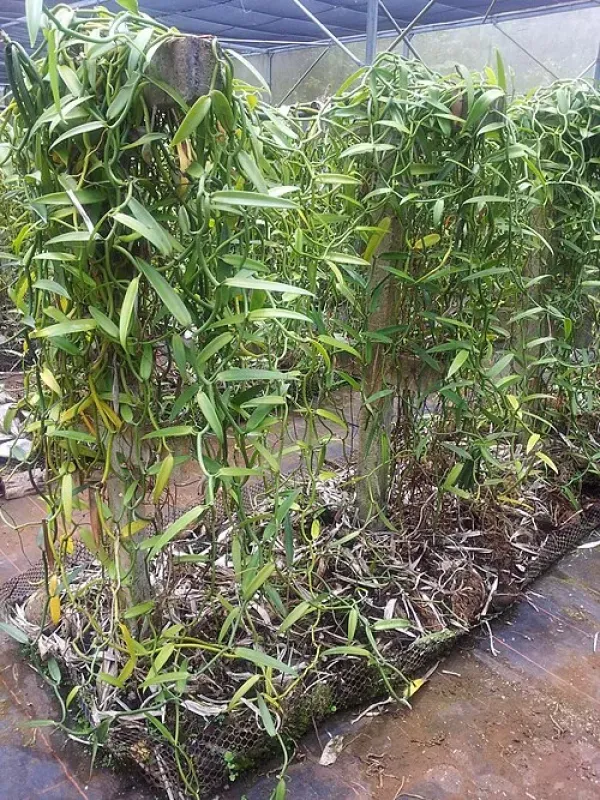
Description
Growing requirements
Hybrid vanilla, resulting from the crossbreeding of Vanilla planifolia and Vanilla tahitensis, belongs to the Orchidaceae family. It is a perennial vine that thrives in tropical environments, characterized by consistent warmth and high humidity levels throughout the year.
The optimal climate for this crop includes temperatures ranging from 20°C to 30°C and a minimum annual rainfall of 2,000 mm. Shade management is essential; the vines require 50% to 70% shading provided by companion trees or artificial structures to mimic their natural forest habitat.
Soil quality is paramount, requiring loose, well-draining substrates rich in organic mulch. The plant's root system is delicate and shallow, necessitating a thick layer of decomposing leaf litter to maintain moisture and provide essential nutrients for vigorous vegetative growth.
Agronomic management involves structural support systems, such as trellises or nurse trees, to allow the vines to climb and facilitate efficient flowering. Pruning is frequently practiced to manage the canopy size and encourage the development of flowering branches near the ground for easier handling.
Successful production relies on controlled environments where temperature fluctuations are minimized. Proper air circulation within the plantation is necessary to prevent the buildup of pathogens, particularly in high-density planting schemes where foliage can become overly dense.
Yield
Hybrid vanilla varieties are valued for their improved yield stability compared to traditional landraces. With optimal manual pollination, a healthy vine can produce a significant cluster of pods, contributing to an average yield of approximately 1 to 2 kilograms of fresh pods per plant per year.
Main diseases and pests
The crop is highly susceptible to fungal diseases such as root rot caused by Fusarium oxysporum, which remains the most significant threat to plantation longevity. Other concerns include anthracnose and viral mosaics, which require strictly monitored phytosanitary practices.
Harvesting
Harvesting is a critical operation performed manually, identifying pods that show signs of yellowing at the distal end. Given the staggered ripening period, farmers must inspect the vines regularly to ensure that pods are collected at the peak of their potential vanillin content.