
Hybrids between Vanilla planifolia and Vanilla odorata
Hybrids between Vanilla planifolia and Vanilla odorata
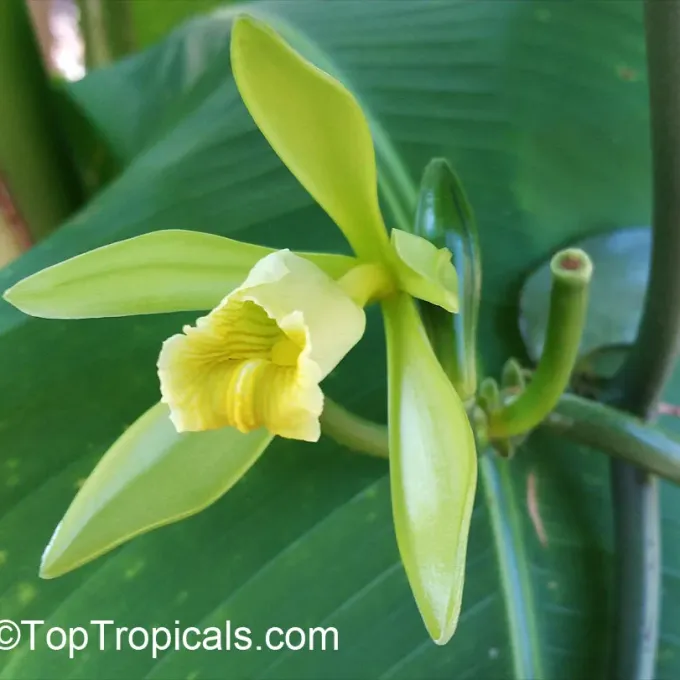
Description
Growing requirements
Hybrids between Vanilla planifolia and Vanilla odorata are highly valued tropical orchids (family Orchidaceae). These hybrids are engineered to optimize the flavor profile and resilience of the vines in cultivated environments.
These plants thrive in tropical climates with temperatures typically between 20°C and 30°C. High atmospheric humidity is essential, as the plant relies on its aerial roots to absorb moisture and nutrients from the air and the support structure.
The soil must be light, airy, and rich in organic matter. A well-draining medium, such as a mix of leaf mold, bark, and charcoal, is ideal to prevent waterlogging, which the plant is highly susceptible to.
Shade management is a core component of the cultivation strategy. In nature, these vines grow in the understory of forests; therefore, artificial shade cloth or natural canopy cover is required to prevent sunburn on the leaves.
Agronomic practices include the regular provision of vertical supports. Since these plants are epiphytic, they climb naturally; providing sturdy trellises or host trees is vital for optimal vegetative growth and subsequent flowering.
Main diseases and pests
Fungal infections remain the primary threat to hybrid vanilla plantations. Fusarium root rot and Phytophthora stem rot can spread rapidly in poorly ventilated plots or during prolonged rainy seasons.
Pests such as snails, slugs, and mealybugs can cause significant economic loss. Snails target tender new shoots, while mealybugs colonize stems and leaves, extracting sap and weakening the plant's structural integrity.
Proper field sanitation is the most effective preventative measure. This includes the removal and destruction of infected plant debris and the regular cleaning of all agricultural tools used for pruning and harvesting.
Integrated Pest Management (IPM) is encouraged, utilizing predatory insects to control populations of aphids and mites. This reduces the need for heavy chemical intervention and supports beneficial biodiversity in the plantation.
Excessive humidity combined with low airflow is a recipe for disaster. Planting density must be carefully calculated to ensure adequate air circulation around the plants, which significantly reduces the risk of fungal outbreaks.
Harvesting
The harvest cycle is a precise operation starting roughly 8–9 months after hand-pollination. Since the flowers bloom individually, the pods mature unevenly, necessitating a selective and meticulous harvesting process.
Harvesting begins when the tip of the pod starts to yellow, indicating the onset of maturation. Picking too early results in low vanillin content, while waiting too long increases the risk of the pod splitting on the vine.
After collection, the pods undergo a curing process. This involves heating and sweating the beans, which stops the biological life of the pod and triggers the enzymes responsible for developing the aromatic compounds.
Sun-drying is the traditional method to reduce moisture content gradually. During this stage, the pods are monitored daily to ensure they develop the correct texture and a uniform dark brown color before being bundled for sale.
Proper storage is essential to maintain the quality of the cured vanilla. Pods should be kept in airtight containers in a cool, dark place to preserve the essential oils and ensure the product reaches the market in prime condition.