
Hybrids between Vanilla planifolia and Vanilla pompona
Hybrids between Vanilla planifolia and Vanilla pompona
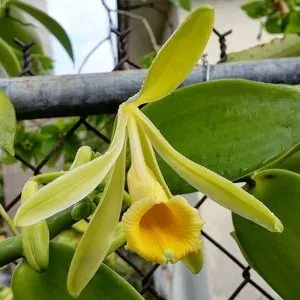
Description
Sowing dates
Propagation of hybrids derived from Vanilla planifolia and Vanilla pompona is primarily conducted through vegetative stem cuttings. The optimal time for planting is the beginning of the rainy season, when atmospheric humidity is at its peak.
Strong stem cuttings, ranging from 50 to 100 centimeters in length, are selected for propagation. Before planting, the cut ends must be left to dry slightly to prevent the development of soft rot within the plant tissues.
The cuttings are planted in a loose, well-draining substrate rich in organic matter. Providing a physical support is essential, as vanilla is an epiphytic vine that requires vertical space to thrive.
During the first few weeks, maintaining shaded conditions is crucial to ensure successful root development and to help the young plants adapt to their environment.
Root system development in these hybrids is relatively slow, making it important to avoid overwatering, which can lead to fungal issues and root decay.
Growing requirements
These hybrids require a tropical climate with high relative humidity and consistently warm temperatures, ideally between 22 and 30 degrees Celsius. They are highly sensitive to sudden temperature fluctuations and intense, direct sunlight.
The soil must be well-structured, rich in humus, and possess excellent drainage. An optimal soil pH level between 6.0 and 7.5 is necessary to ensure efficient uptake of essential nutrients.
The plants thrive in semi-shaded conditions, often cultivated under a canopy of support trees that provide filtered light and help maintain the necessary microclimate for growth.
Consistent irrigation is vital, although standing water in the root zone must be avoided. Organic mulching is highly recommended to retain soil moisture and protect the surface roots from heat stress.
Fertilization should be moderate, focusing on organic sources such as compost or well-rotted manure, which help maintain healthy soil microbiota and long-term fertility.
Yield
The yield of these hybrid forms often exceeds that of the pure Vanilla planifolia species due to heterosis, or hybrid vigor, and enhanced resilience against environmental stressors.
Initial flowering typically begins three to four years after planting, requiring significant long-term investment and labor from the producer before the first commercial harvest.
Hand-pollination is the most labor-intensive process, as natural pollinators are often absent in cultivation areas. This must be done manually during the morning hours when the flowers are fully receptive.
The quality and quantity of pods depend on meticulous management and the maturity of the plantation; a healthy vine can remain productive for up to 7–10 years.
Post-harvest, the pods undergo a complex curing and fermentation process, which is essential to develop the high vanillin content and aroma for which the spice is valued.
Main diseases and pests
Fungal diseases, such as root rot and anthracnose, are the primary threats, particularly in conditions of excessive humidity or poor air circulation within the plantation.
Pests such as mealybugs, spider mites, and snails can cause significant damage to young shoots, developing pods, and floral buds, leading to reduced overall yield.
- Fusarium root rot
- Stem anthracnose
- Scale insect infestation
- Fruit rot
Effective management relies on integrated pest control strategies, including pruning and the maintenance of optimal planting density to improve airflow and reduce humidity levels.
Sanitary measures, such as removing infected parts and clearing fallen foliage, are basic yet essential practices to minimize the pathogen load in the orchard.
Harvesting
Harvesting begins when the pods start to show a slight yellow tint at the base, indicating that they have reached maturity and have accumulated the necessary aromatic oils.
It is critical to avoid allowing the pods to fully ripen on the vine, as this leads to splitting, which severely reduces the commercial grade and quality of the final product.
Harvesting is performed selectively over several weeks, as individual pods within a cluster do not ripen simultaneously, requiring frequent monitoring of the plantation.
Freshly harvested pods have little aroma; they must undergo a post-harvest curing process that involves thermal treatment and moisture reduction to stabilize the spice.
The final cured product consists of dark-brown, oily, and highly aromatic pods that are ready for export and consumption in the global spice market.