
Vanilla planifolia x Vanilla phaeantha hybrid
Hybrids between Vanilla planifolia and Vanilla phaeantha
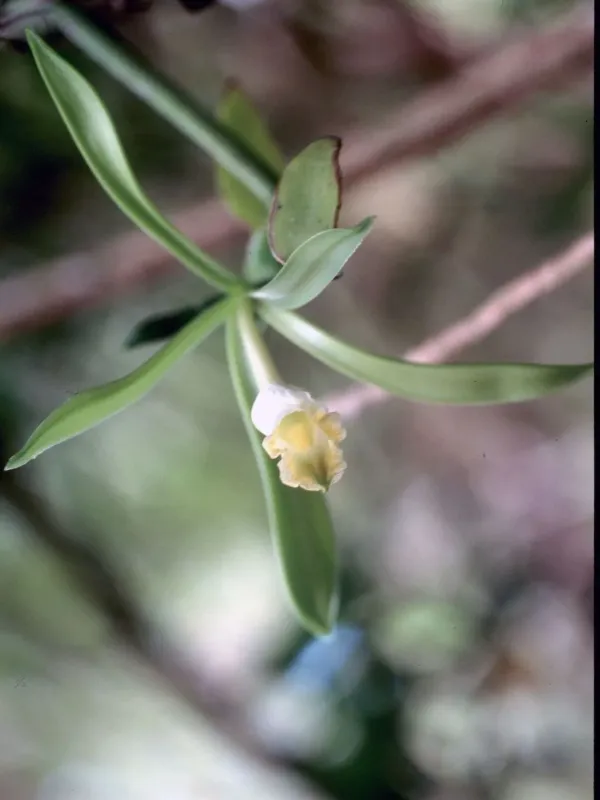
Description
Sowing dates
The propagation of this hybrid is carried out exclusively through vegetative cuttings. The most favorable time for planting is during periods of high humidity and stable temperatures, typically in spring or the early rainy season.
Cuttings should be between 30 and 50 centimeters in length and contain several nodes with aerial roots. Before planting, it is essential to allow the material to dry slightly in the shade to prevent potential rot.
Cuttings are placed into a loose, well-draining substrate, requiring a vertical support structure as the plant is a climbing vine. Proper planting depth is crucial, ensuring lower nodes are in contact with the soil to encourage rooting.
Root development is a slow process; therefore, it is vital to avoid waterlogging the substrate, as this can easily lead to the decay of young plants. Careful moisture management is the key to success.
Once successfully established, the plant begins to grow rapidly, producing vine shoots that require consistent training and support throughout the growing season.
Growing requirements
This hybrid belongs to the Orchidaceae family and demands specific microclimatic conditions similar to tropical rainforests. The optimal temperature range for growth is between 22 and 30 degrees Celsius.
Vanilla prefers filtered or diffused light, as direct sunlight can cause significant damage to the leaves. In professional farming, shading systems or natural canopy cover are standard practices.
The soil must be rich in organic matter, possessing a loose texture and excellent aeration. Vanilla is extremely sensitive to water stagnation at the roots, making an effective drainage layer mandatory.
High relative humidity (above 70-80%) is necessary for the healthy development of the vine and prevents the drying out of aerial roots. Regular misting is recommended in drier regions.
Agricultural practice involves the regular application of organic fertilizers or mulch, such as wood chips or compost, which mimics the natural forest floor and provides essential nutrients.
Yield
The primary agricultural objective is the production of pods containing vanillin and other aromatic compounds. Harvesting is only possible 3 to 4 years after initial planting once the vines reach maturity.
Flowering is a short-lived event, and manual pollination is required for every individual flower to ensure fruit set, which directly determines the final crop yield.
Yield depends on plant age, maintenance quality, and specific seasonal climatic conditions. Professional plantations strive to maximize the number of well-developed pods on each vine.
Pod development from fertilization to technical maturity lasts between 6 and 9 months. Consistent agricultural practices ensure a stable volume of raw material for the food and cosmetic industries.
Post-harvest fermentation is a critical stage that determines the final aromatic concentration and quality of the finished product, requiring technical expertise.
Main diseases and pests
Fungal diseases, such as Fusarium wilt and anthracnose, are the primary threats, especially when humidity and airflow are not properly controlled. Good plantation hygiene is the first line of defense.
Viral infections can also affect vanilla plants, causing leaf distortion and reduced vigor. Transmission often occurs through contaminated pruning tools or insect vectors.
Pests like nematodes, which attack the root system, and various mites or aphids, which feed on young shoots, can significantly lower plant productivity if left unmanaged.
Stem and root rot are common consequences of poor drainage and waterlogged soil. Immediate removal of affected parts and the application of appropriate fungicides are necessary to prevent losses.
Continuous monitoring of the plantation is essential to detect early signs of disease and stop any potential spread across the crop area.
Harvesting
Harvesting is a selective process, performed as pods begin to show a slight yellowing at the tip. Timing is critical, as premature harvesting reduces aroma, while delayed harvesting causes pods to split.
Pods are carefully harvested using sharp tools to avoid damaging the flower raceme, where new blooms may develop in subsequent seasons.
The raw crop requires immediate processing, including blanching and a long drying cycle, to initiate fermentation and develop the characteristic vanilla aroma.
Drying is performed under controlled temperature and humidity conditions, often involving alternating sun-drying and chamber-curing to ensure moisture removal and quality retention.
Final sorting is performed by hand based on pod length, aroma, and appearance, followed by vacuum sealing to maintain the high concentration of essential oils for market.