
Homalium smythei
Homalium smythei
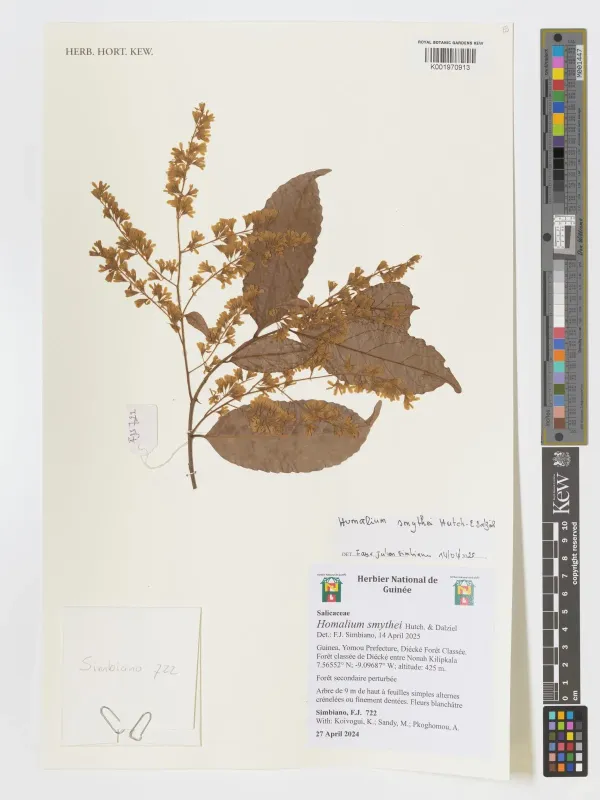
Description
Growing requirements
Homalium smythei is a member of the Salicaceae family, recognized for its significant role in the tropical forests of West Africa. It is a large canopy tree that thrives in specific ecological niches.
The culture requires a tropical climate characterized by consistently high temperatures and significant annual precipitation to maintain its physiological processes and growth rate.
Ideal soil conditions include deep, well-drained, and nutrient-rich substrates. The tree shows optimal development when planted in soils with good organic matter content.
Botanically, the species is known for its sturdy trunk and dense foliage, which are adaptations to the competitive environment of the tropical forest floor and lower canopy layers.
Agronomic management of young plantations involves regular clearing of competing vegetation and protection from initial drought stresses during the early establishment phase.
Yield
The primary economic use of Homalium smythei is its high-quality timber, prized for its density and durability, making it a valuable resource for the forestry industry.
Wood products derived from this tree are widely used in the manufacturing of high-end furniture, flooring, and durable structural components suitable for indoor and outdoor use.
Sustainable logging practices are essential for maintaining the yield of this species, as it provides both economic and ecological value within its native forest habitat.
In local communities, the timber is often utilized for construction purposes due to its natural resistance to decay and ability to withstand humid tropical conditions.
Future potential for the species includes its use in agroforestry systems where it can provide both timber products and protective shade for other shade-tolerant crops.
Main diseases and pests
Primary threats to the population of Homalium smythei include widespread deforestation and the conversion of native forest lands into agricultural plantations.
Wood-boring insects, including termites, pose a significant risk to the longevity and quality of the timber, requiring protective measures during storage and construction.
Fungal diseases can develop in the high-humidity environment of the tropics, potentially impacting both the root system and the stem health of the trees in dense plantations.
Climate change impacts, specifically erratic rainfall patterns, can impose physiological stress on young trees, increasing their susceptibility to secondary infections and pests.
Integrated forest management strategies, including monitoring for pest outbreaks and promoting natural regeneration, are critical to ensuring the survival of the species.