
Haageocereus acranthus
Haageocereus acranthus
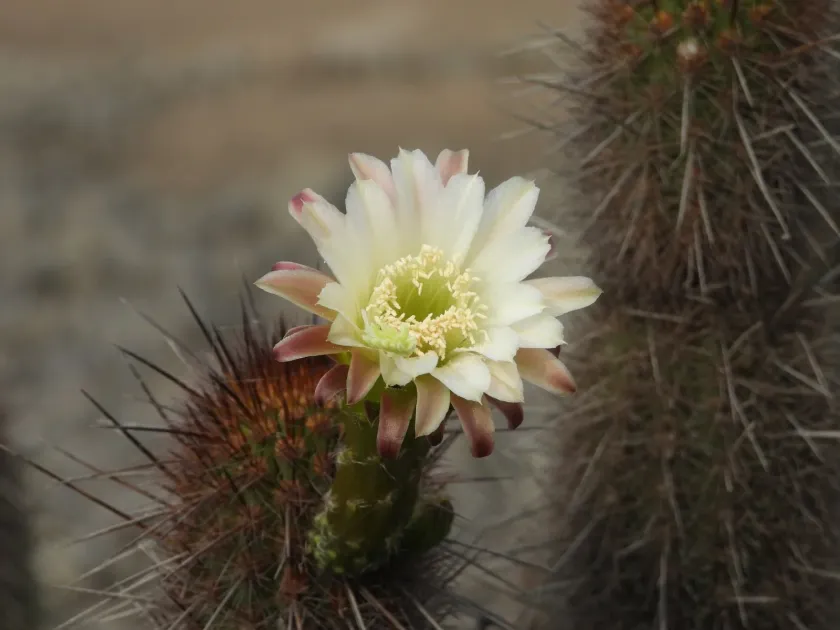
Description
Growing requirements
Haageocereus acranthus is a species of cactus belonging to the Cactaceae family. Originating from the arid coastal regions of Peru, this plant has evolved to thrive in rocky environments with limited rainfall and intense solar radiation.
The plant exhibits a columnar growth habit, often forming clusters of stems. Its surface is characterized by prominent ribs adorned with dense spines, which serve as a protective mechanism against herbivores and environmental stressors such as excessive heat.
Cultivation requirements necessitate high light intensity to maintain the plant's structural integrity and characteristic spination. In a controlled environment, such as a greenhouse or a sunny interior, adequate air ventilation is essential to mimic its natural habitat.
Regarding soil conditions, this species demands excellent drainage. The ideal substrate is a mixture of mineral components like volcanic rock, coarse sand, and perlite, ensuring that water passes through quickly without accumulating around the roots.
Temperature management involves warm summers for active growth and cool, dry winters to induce a period of dormancy. Avoiding freezing temperatures is critical, as the plant's succulent tissue is sensitive to frost, which can cause internal damage.
Main diseases and pests
The most significant threats to Haageocereus acranthus are root and stem rots induced by improper watering and poor soil aeration. These fungal pathogens can be fatal if the moisture levels remain too high for extended periods, especially during cooler months.
Common pests affecting this species include mealybugs and spider mites. These insects thrive in dry, stagnant air and can cause significant damage to the epidermis and growth points if left uncontrolled by the cultivator.
Scale insects can also be a nuisance, attaching themselves to the stem and depleting the plant's energy reserves. Regular visual inspections and timely application of systemic insecticides are standard procedures for effective management.
Prevention relies on quarantine measures for new arrivals and keeping the growing environment clean. Avoiding excessive nitrogen fertilization prevents the development of weak, etiolated tissues that are more susceptible to disease and pest infestation.
The primary horticultural use of this species is in specialty succulent collections and xeriscaping. Its unique, architectural appearance makes it a sought-after subject for desert-themed gardens and indoor plant enthusiasts globally.