
Geissorhiza inaequalis
Geissorhiza inaequalis
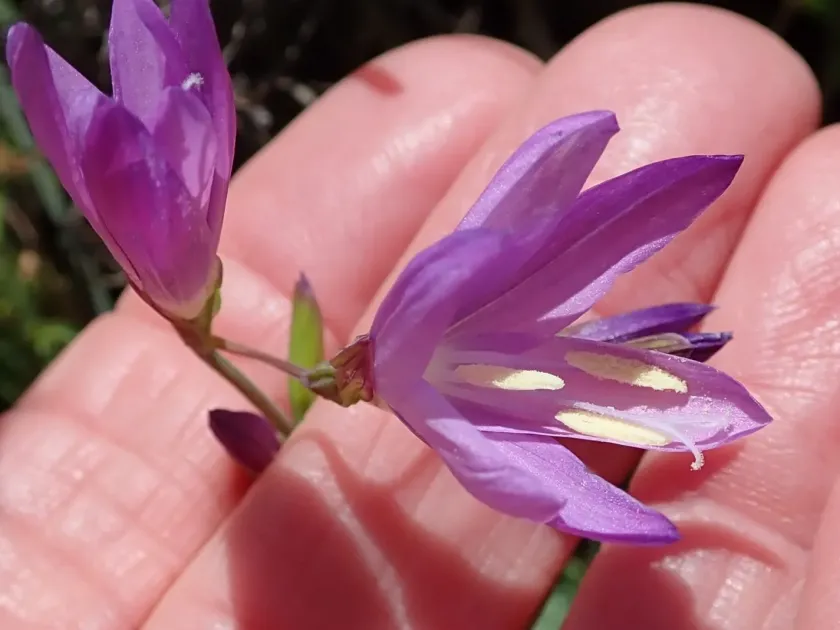
Description
Sowing dates
Corms are best planted in early autumn. Place them at a depth of 3 to 5 cm in a sandy, well-draining substrate. Spacing should be sufficient to allow for air circulation between the leaves, usually around 5–8 cm apart, to minimize the risk of bacterial or fungal infections.
Growing requirements
Geissorhiza inaequalis is a perennial cormous plant belonging to the Iridaceae family. Native to the Cape region of South Africa, it is a specialized geophyte that has evolved to survive in habitats characterized by cool, wet winters and hot, arid summers.
The botanical structure of the plant features a dormant corm that remains underground during the harsh summer months. Its foliage is typically narrow and grass-like, while the flowers, which are the main ornamental feature, appear on slender stems, often displaying vivid colors and unique symmetrical patterns.
Successful cultivation of Geissorhiza inaequalis relies on strict imitation of its native Mediterranean climate. Soil must be exceptionally gritty and free-draining to prevent rot during the winter growing season. Adding pumice or horticultural grit to a standard potting mix is highly recommended.
Adequate sunlight is the primary driver of development. In indoor or greenhouse settings, these plants require high light levels to prevent leggy growth and to ensure the corm stores enough energy for the subsequent year's cycle. Partial shade will lead to failure in flowering.
The watering regime is critical for this species. During the active growing period from autumn to spring, plants should be kept consistently moist but never waterlogged. As the foliage begins to yellow in late spring, irrigation must be completely withdrawn to induce the essential dormant phase.
Main diseases and pests
The most significant threats to Geissorhiza inaequalis are root rot and basal rot caused by waterlogging or high humidity during the dormant season. Pests such as aphids and spider mites can occasionally affect plants in confined environments, requiring prompt insecticidal treatment.
Harvesting
Once the foliage has withered naturally, the dormant corms can either be lifted for storage or left undisturbed in their pots if kept perfectly dry. Storage should occur in a cool, dry, and well-ventilated location to prevent premature sprouting before the autumn planting season.