
Gamochaeta filaginea
Gamochaeta filaginea
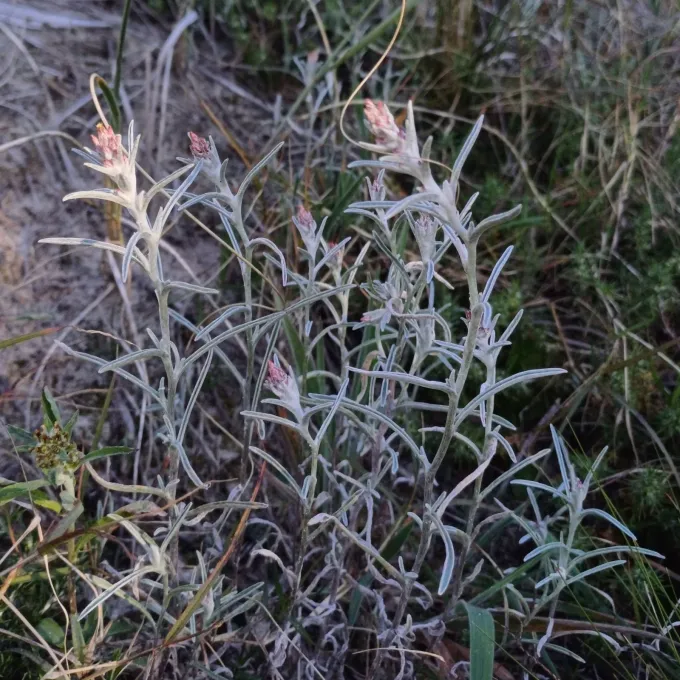
Description
Growing requirements
Gamochaeta filaginea is a herbaceous plant belonging to the Asteraceae family. While it is not a traditional agricultural crop, understanding its biology is essential for weed management in various cropping systems.
The plant features a distinct tomentose or woolly appearance, with greyish leaves that help the plant retain moisture. Its growth habit is typically erect, with branching stems that emerge from a basal rosette.
Botanically, it produces small flower heads arranged in terminal spikes or clusters. The seeds are small and lightweight, equipped with a pappus, facilitating long-distance dispersal via wind or mechanical equipment.
It thrives in open, disturbed habitats such as pastures, roadsides, and cultivated fields. It shows a strong preference for well-drained, sandy or acidic soils where it can easily establish itself due to low competition.
The geographic distribution of the species is broad, often found in subtropical and temperate regions. Its ability to tolerate low soil fertility makes it a persistent colonizer in marginal agricultural lands.
Main diseases and pests
As a common weed, Gamochaeta filaginea is susceptible to various environmental stressors and biological threats, which naturally limit its population growth in certain seasons.
Powdery mildew is a common fungal threat, creating a white mycelial layer on the leaf surface that hinders photosynthesis and slows the development of the plant during humid periods.
Insect pests, specifically aphids and thrips, frequently feed on the succulent parts of the plant. These pests can cause significant stunting, though they rarely eliminate the weed entirely.
Soil-borne pathogens like Fusarium species may attack the root system, particularly in waterlogged conditions, causing the plant to wilt and die prematurely during the growing cycle.
Effective management in the field typically involves manual weeding before seed set or the application of pre-emergent herbicides to reduce the soil seed bank effectively.