
Gamochaeta calviceps
Gamochaeta calviceps
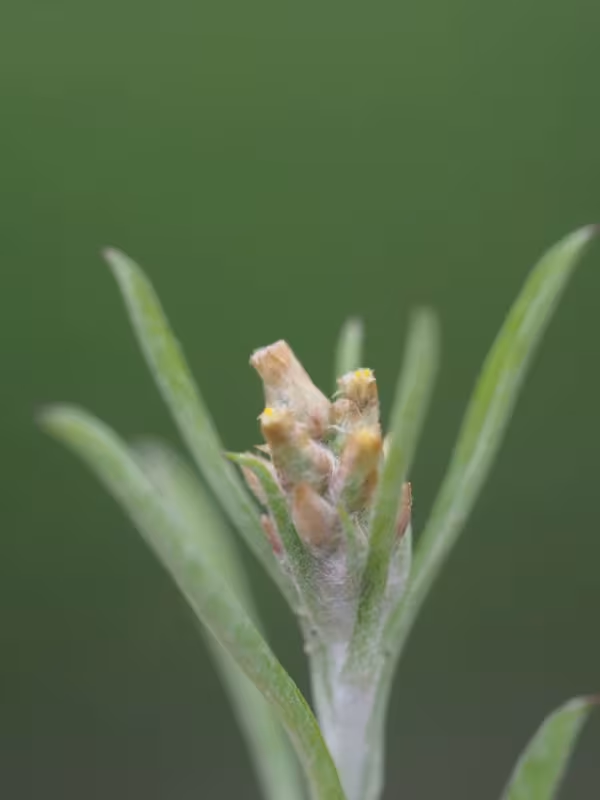
Description
Growing requirements
Gamochaeta calviceps, commonly known as bald-headed cudweed, belongs to the Asteraceae family. It is an herbaceous plant that frequently appears as an invasive species or a weed in various agricultural and natural landscapes.
Native to South America, the plant has successfully expanded its range across many temperate and subtropical zones. It thrives in disturbed soils, making it a common sight in fields, road verges, and agricultural plots.
The plant demonstrates a preference for well-drained, sandy, or loam soils. It is particularly well-suited to areas with low nutrient availability, where it can outperform many indigenous grass species.
Environmental conditions that favor its growth include full sun and moderate moisture levels. Despite its needs, it exhibits remarkable drought tolerance, which is a key factor in its successful colonization of diverse ecosystems.
Botanically, it is recognized by its silvery-grey foliage, which is covered in fine, felt-like hairs. This adaptation is crucial for surviving in high-heat environments and helps the plant maintain water homeostasis during dry spells.
Main diseases and pests
As an agricultural weed, Gamochaeta calviceps poses a significant challenge by competing for essential resources such as water, light, and soil nutrients. Dense infestations can significantly hinder crop yields.
The primary threat from this species lies in its prolific seed production. The lightweight seeds are easily disseminated by wind, facilitating the rapid colonization of adjacent agricultural lands.
Few natural pests or diseases are known to effectively suppress this plant, which contributes to its status as a resilient agricultural threat. It lacks specialized predators in most non-native regions.
Effective management strategies focus on preventing the establishment of the weed through integrated weed management (IWM). This includes maintaining high crop vigor and competitive ability against opportunistic species.
Chemical control remains a viable option when used in combination with cultural practices. Application of selective herbicides during the early stages of development is critical to prevent the weed from reaching maturity and setting seeds.