
American purple cudweed
Gamochaeta americana
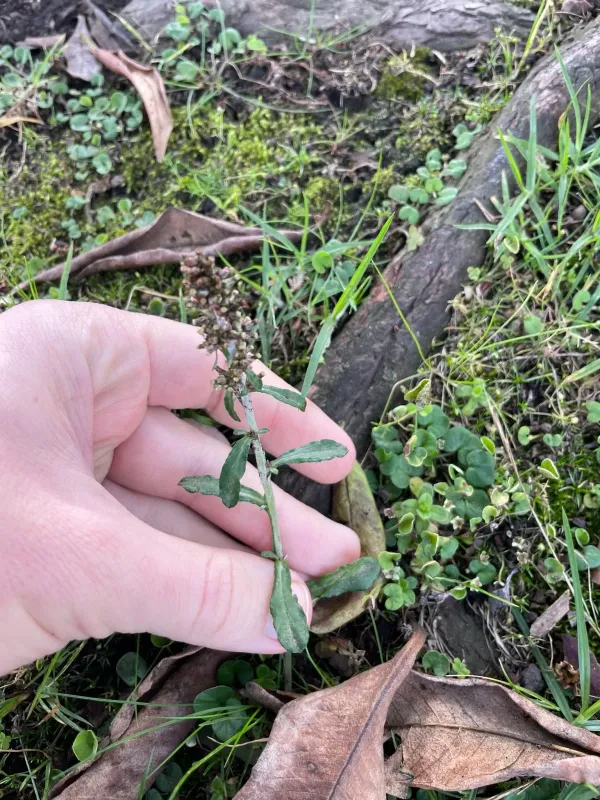
Description
Sowing dates
Gamochaeta americana, commonly known as American purple cudweed, is an herbaceous plant belonging to the Asteraceae family. Sowing typically occurs in early spring once the soil temperature is consistently above 10 degrees Celsius, ensuring optimal germination conditions.
The seeds are notably small, requiring shallow placement at a depth of no more than one centimeter to prevent deep-burying, which could inhibit emergence. High soil moisture is critical during the initial germination phase to ensure a strong start for the seedlings.
Field management often involves mechanical sowing in rows to maintain consistent spacing, which facilitates weeding and maintenance. Proper spacing is essential to reduce plant competition and allow for healthy leaf development.
Rapid growth is a characteristic feature of this species. Under ideal conditions, seedlings emerge within three weeks, exhibiting a high tolerance for environmental shifts after the initial establishment phase.
Due to the plant's natural tendency to spread through seed dispersal, monitoring sowing density is crucial to prevent the culture from encroaching upon surrounding agricultural zones or natural landscapes.
Growing requirements
This crop thrives in well-lit environments and prefers full sun exposure to maximize its biomass production. It is highly adaptable to various soil types, ranging from sandy loam to more structured silty clay soils.
Soil pH levels should ideally range between 5.5 and 7.0 for the best nutrient uptake. The plant displays moderate drought tolerance but performs best when provided with regular moisture during its vegetative growth stages.
Good drainage is an essential requirement for this species. Waterlogging can lead to poor oxygen availability in the root zone, significantly increasing the risk of physiological stress and potential root failure.
Agrotechnical practices should focus on maintaining weed-free conditions, particularly in the early growth stages, as the plant can be outcompeted by more aggressive invasive weeds before it establishes a strong root system.
- Light: Prefers high intensity direct sunlight.
- Soils: Well-drained, fertile loams are optimal.
- Nutrient needs: Low to moderate, prefers slow-release organic fertilizers.
Main diseases and pests
Gamochaeta americana is generally robust; however, high-density cultivation can lead to issues with powdery mildew, especially in regions with high nocturnal humidity or poor air circulation.
Aphid populations are the most common pest threat, frequently colonizing the flower stalks and growing tips, causing stunted growth and distorted leaf development if not managed promptly.
Root rot, caused by various fungal pathogens, remains a primary threat during periods of excessive rainfall or poor soil drainage, necessitating careful irrigation management and site selection.
Integrated Pest Management (IPM) strategies, including the use of neem-based oils or biological insect control, are effective in controlling infestations without disrupting the local ecosystem.
Crop rotation remains the most effective defense against soil-borne diseases. Avoiding the planting of Asteraceae species in the same site for more than two consecutive years significantly lowers the disease pressure.