
Fritillaria raddeana
Fritillaria raddeana Regel
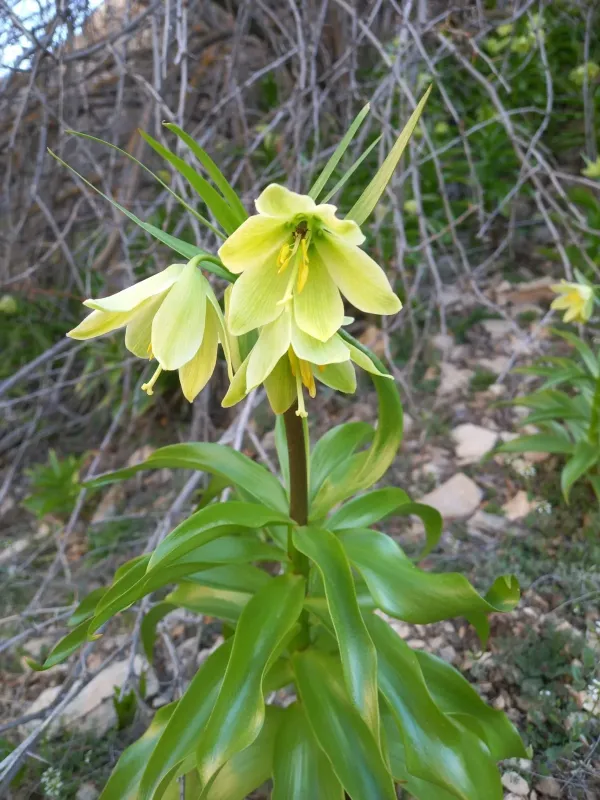
Description
Sowing dates
The planting of Fritillaria raddeana bulbs should take place in early autumn when soil temperatures have cooled down. Late September is generally considered the ideal time to allow the roots to establish before the ground freezes.
Bulbs must be planted at a depth of three times their diameter to ensure proper stability and growth. On heavy soils, it is highly recommended to place a handful of sand beneath the bulb to prevent rot and improve drainage.
Space the bulbs approximately 25–30 centimeters apart to prevent competition for nutrients. This spacing allows the impressive foliage to develop fully without overcrowding, which is essential for the bulb's energy storage for the following year.
Division of the bulb clumps is usually performed every 3 to 4 years. By carefully lifting the bulbs after the foliage has died back, you can separate the offsets to expand your planting area or rejuvenate the main bulb.
Propagation from seeds is possible but requires significant patience, as plants grown from seeds typically take several years to reach their flowering stage. Sowing should be done in containers or seedbeds immediately after ripening.
Growing requirements
Fritillaria raddeana, a member of the Liliaceae family, is a native of Central Asia and Iran. It is a true spring ephemeral that requires a sunny location to bloom, although it appreciates some light shade during the heat of the day.
This species thrives in well-drained, fertile soil with a neutral to slightly alkaline pH. Drainage is the most critical factor; even a short period of waterlogging can be fatal to the bulbs during their dormant or early growing phases.
During the spring growth spurt, the plant requires consistent moisture. However, once the flowers have faded and the leaves begin to yellow, the plant requires a dry period, simulating its natural habitat's summer drought.
Fertilization with a balanced, slow-release fertilizer in early spring helps support vigorous growth. Avoid excessive nitrogen, which can lead to lush but weak foliage that is more susceptible to fungal infections.
Winter hardiness is excellent for this species, but it is advised to apply a layer of organic mulch in areas with severe winters. This prevents deep frost penetration and helps maintain a more stable soil temperature.
Main diseases and pests
Fungal infections, particularly grey mold (Botrytis), are common if soil conditions are too moist. Symptoms include soft, mushy tissues on the bulb and brown spots on the stems, necessitating immediate removal and destruction of the infected material.
The lily beetle is the primary insect pest affecting this plant. These bright red beetles and their larvae feed on foliage and buds; regular inspection and manual removal are the most effective non-chemical methods for smaller gardens.
Rodents, such as voles, may dig up and eat the succulent bulbs. Protecting the bulbs with wire mesh baskets at the time of planting is a standard practice to ensure the survival of the population in garden beds.
Viral infections can cause mottled colors on leaves and deformed flowers. Since there is no cure for these viruses, affected plants should be promptly rogue out to prevent the spread of the pathogen by aphids or contaminated tools.
Proper hygiene is essential; always disinfect garden tools after pruning or handling infected plants to prevent the spread of diseases within the garden patch.