
Eduard's Fritillary
Fritillaria eduardii Regel ex Losinsk.
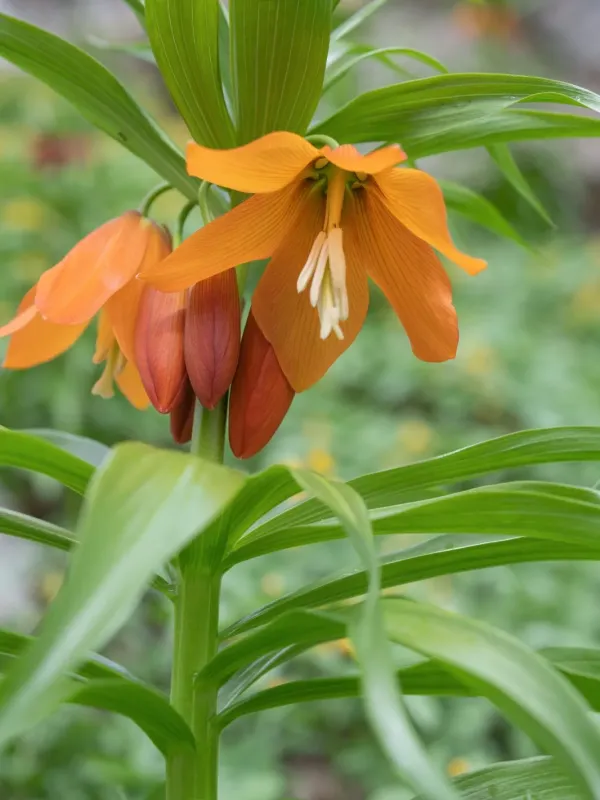
Description
Sowing dates
Planting of Eduard's Fritillary bulbs should occur in late summer or early autumn. This timing allows the root system to establish itself before the ground freezes while keeping the plant dormant until spring.
The planting depth is typically around 15–20 centimeters. Deep planting provides stability and protects the bulb from extreme temperature fluctuations during the dormant winter months.
Choose a location that offers well-drained soil. If your soil is heavy or prone to waterlogging, it is recommended to add a layer of coarse sand or gravel at the bottom of the planting hole.
Maintain a spacing of at least 30 centimeters between bulbs. Proper spacing ensures adequate air circulation, which is crucial for reducing the risk of fungal infections in the foliage.
After planting, ensure the soil is lightly firmed. While watering is initially necessary to settle the soil, avoid keeping the area overly saturated to prevent bulb rot.
Growing requirements
Eduard's Fritillary is a member of the Liliaceae family, originating from Central Asia. It thrives in temperate environments that mimic its natural alpine and subalpine habitat.
The soil should be fertile, light, and neutral to slightly alkaline in pH. Organic matter, such as well-rotted compost, can be incorporated into the soil to improve its structure and fertility.
Sunlight requirements include full sun to partial shade. Exposure to adequate sunlight during the spring growing season is essential for the plant to accumulate enough energy for the next year.
Water management is critical. While the plant needs regular moisture during the growing phase, it requires a dry resting period in the summer months to ensure the bulb matures properly.
Feeding should be done with a balanced fertilizer early in the growing season. Potassium-rich fertilizers are especially beneficial for promoting strong bulbs and vibrant flower development.
Main diseases and pests
Botrytis, or gray mold, is a common fungal threat that appears as fuzzy spots on leaves. This is usually triggered by poor drainage or excessive humidity around the foliage.
The lily beetle is a major pest for Fritillaria species. Adult beetles and their larvae feed on the foliage and stems, significantly reducing the plant's photosynthetic capacity.
In addition to insects, slugs and snails may attack tender new growth in the spring. Using protective barriers or organic deterrents around the base of the plant is recommended.
Prevention involves keeping the planting area clean of debris where pests and diseases might overwinter. Routine inspection of the plants is essential for early detection.
If viral symptoms appear, such as mosaic patterns on leaves, the affected plant must be removed and destroyed to prevent the spread of the virus to healthy specimens.