
Snake's head fritillary
Fritillaria meleagris L.
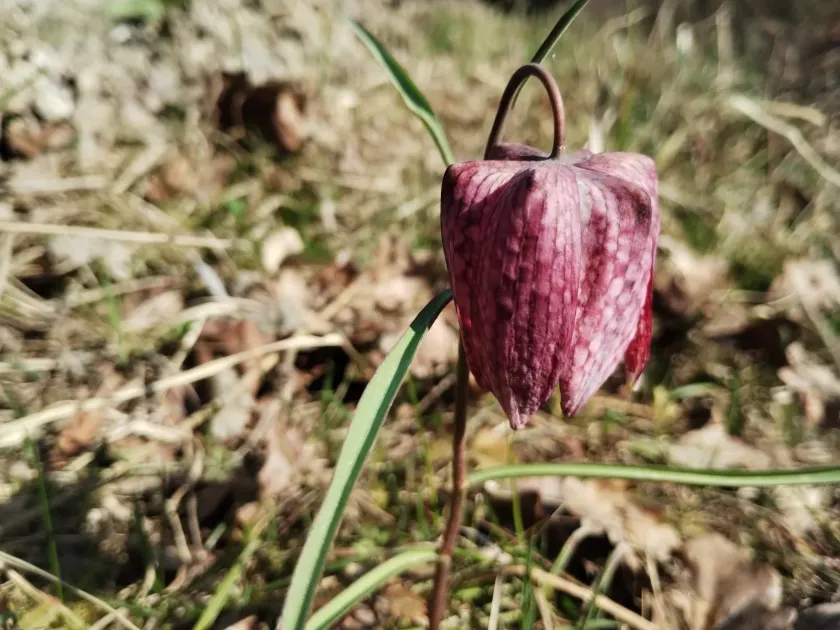
Description
Sowing dates
The snake's head fritillary is a perennial bulbous plant belonging to the Liliaceae family. Bulbs are primarily planted in the ground during late August or September, allowing the plant to establish roots before the onset of persistent frosts.
Spring planting may delay flowering, so agronomists recommend sticking to autumn planting schedules to ensure the bulb undergoes the necessary stratification period in the soil.
The planting depth depends on the bulb size and soil type: typically, it is about 10–15 centimeters, which is approximately three times the diameter of the planting material.
To create dense decorative groups, fritillaries should be planted at intervals of 15–20 centimeters, providing sufficient space for the root system and the development of daughter bulbs.
When propagating from seeds, sowing is carried out immediately after collection, but this method is time-consuming as seedlings take about 3–5 years to flower.
Growing requirements
The plant prefers well-drained, moist, but not waterlogged soils rich in humus and organic matter. The best choice is land with light loam or cultivated sandy soil with a neutral or slightly acidic pH.
The crop is light-loving but adapts successfully to partial shade conditions, making it ideal for planting under tree canopies or as part of spring flower beds.
Snake's head fritillary has high frost resistance and can tolerate harsh winters without extra covering if effective drainage of meltwater is ensured.
During the active vegetation period, the plant requires regular watering, especially during prolonged spring droughts when intensive bud and stem formation occurs.
An important success factor is annual fertilization with complex mineral fertilizers during the early growth phase and after flowering to ensure proper bulb maturation.
Main diseases and pests
The main threat to the crop comes from fungal diseases, such as gray mold, which affects bulb tissues and stems during periods of excessive soil moisture.
Pests, specifically the lily beetle, can cause significant damage to the leaf blade by multiplying rapidly and destroying the plant's green mass in a short period.
Additionally, bulbs are often damaged by rodents, such as field mice, which find them nutritious during periods of winter food shortages.
To prevent rot infections, it is recommended to treat bulbs with fungicide solutions before planting, which reduces the risk of pathogens developing in the soil.
- Regular inspection of plants for pest larvae.
- Adherence to crop rotation and avoidance of water stagnation.
- Mulching the soil to maintain an optimal microclimate.
- Application of insecticides during mass insect appearance.
- Timely culling of diseased specimens from the site.
Harvesting
Harvesting bulbs is carried out after the complete yellowing and wilting of the plant's aerial part, which usually occurs in the second half of June or early July.
Dug-up bulbs must be cleaned of soil residues, dried in a shaded, well-ventilated room at approximately 20 degrees Celsius, and sorted by size.
Storing planting material requires special attention: bulbs should not be over-dried, so they are often stored in peat or sawdust to maintain optimal humidity levels.
The storage temperature should be moderately warm to ensure proper formation of flower buds inside the bulb for the next season.
Periodic checking of stocks for rot spots allows maintaining the planting material in a healthy condition until the moment of autumn planting in the soil.