
Oblique fritillary
Fritillaria obliqua
Description
Growing requirements
The Oblique fritillary (Fritillaria obliqua) is a rare bulbous plant belonging to the Liliaceae family. It is native to the rocky slopes of Greece, where it thrives in conditions that offer excellent drainage and spring moisture followed by dry summers.
Cultivation requires a sunny or partially shaded site with protection from harsh winds. The soil should be gritty, well-draining, and rich in organic matter to mimic the natural rocky habitats of the species. Waterlogging is the primary cause of bulb rot.
The plant demands a distinct dormant period during the summer months. In regions with wet summer seasons, gardeners must lift the bulbs to store them in a cool, dry place until the autumn planting cycle begins to ensure healthy development.
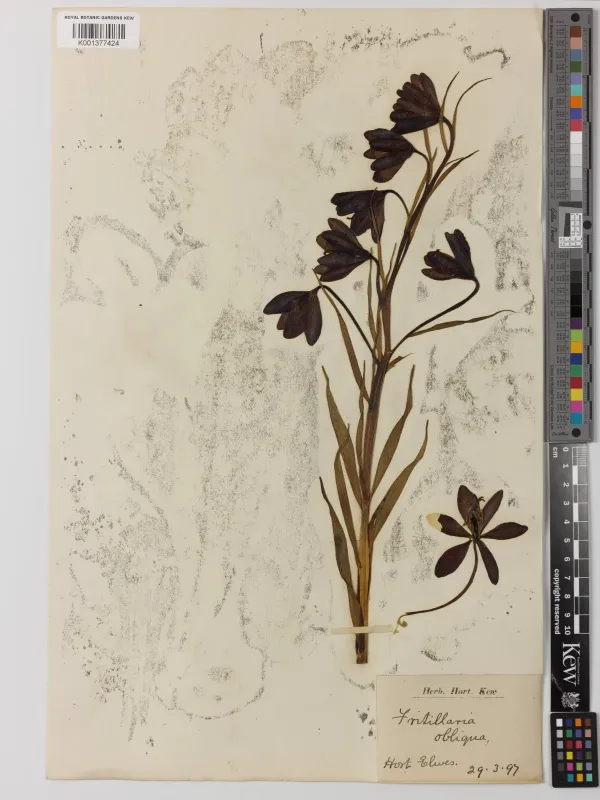
Botanically, this species is noted for its deep purple to near-black bell-shaped flowers arranged in a raceme. The foliage is narrow, lanceolate, and arranged alternately along the stem, providing an elegant appearance typical of the Fritillaria genus.
Propagation is typically achieved through offsets, which should be carefully removed from the parent bulb during the dormant season. Propagation by seed is possible but requires high horticultural skill and several years to reach maturity.
Main diseases and pests
Fungal diseases such as botrytis (gray mold) pose the most significant threat to this culture, especially during periods of high humidity. Regular soil aeration and application of fungicides are necessary to protect the bulbous structure.
Common pests include the lily beetle, which can defoliate the plant quickly, and the bulb mite. Integrated pest management, including visual monitoring and early intervention with systemic insecticides, is crucial for plant health.