
Portuguese fritillary
Fritillaria lusitanica
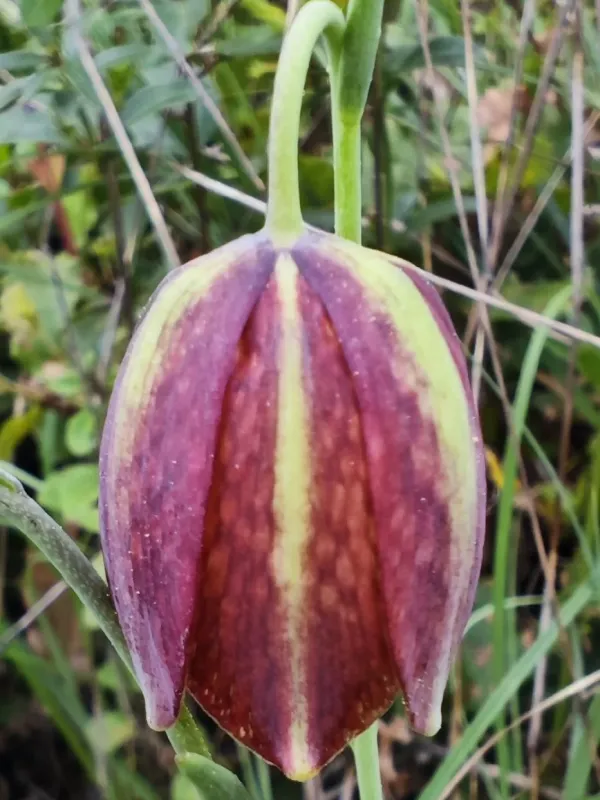
Description
Sowing dates
The Portuguese fritillary (Fritillaria lusitanica) is a perennial bulbous plant belonging to the Liliaceae family. It is best planted during the autumn months to allow root establishment before winter.
Planting typically occurs between September and October. Bulbs should be placed in the soil at a depth of 10 to 15 cm, depending on the size of the bulb and soil texture.
Proper spacing is crucial for healthy development. A distance of 15 to 20 cm between bulbs helps ensure adequate air circulation and reduces the risk of overcrowding.
Choosing the right site is essential; the soil must be well-drained. In clay-heavy conditions, adding grit or coarse sand at the bottom of the planting hole is recommended to prevent rot.
Once planted, mulching the area helps protect the bulbs from extreme temperature fluctuations and retains the necessary moisture during the early spring growth phase.
Growing requirements
Portuguese fritillary thrives in sunny locations, though it can tolerate partial shade. Full sun encourages more vibrant blooms and stronger stems, which are less prone to lodging.
The plant prefers neutral to slightly acidic, loose, and fertile soil. Drainage is the most important factor, as these bulbs are highly sensitive to waterlogged conditions.
Regular but moderate watering is necessary during the active growing season. Overwatering should be strictly avoided to prevent fungal infections in the root zone.
Fertilization with a balanced, low-nitrogen mineral fertilizer promotes bulb health. Applying nutrients during the early foliage development stage supports optimal flower production.
While relatively hardy, the plant benefits from winter protection in colder climates. Applying a layer of straw or conifer branches can prevent the soil from freezing too deeply.
Main diseases and pests
The lily beetle is the most significant threat to Fritillaria species. Both adult beetles and their larvae can cause severe defoliation, weakening the plant significantly.
Bulb rot, often caused by Fusarium or other soil-borne fungi, is a common issue. It typically arises when plants are grown in heavy, wet soils with insufficient drainage.
Integrated pest management, including regular inspection and manual removal of beetles, is the most effective approach for small-scale cultivation of these plants.
Good cultural practices, such as ensuring proper spacing and avoiding overhead watering, significantly reduce the incidence of fungal diseases like grey mould.
If bulbs become infected, they should be removed and destroyed immediately. Soil sterilization or replacing the affected area is necessary before replanting in that spot.