
Filago eriocephala
Filago eriocephala
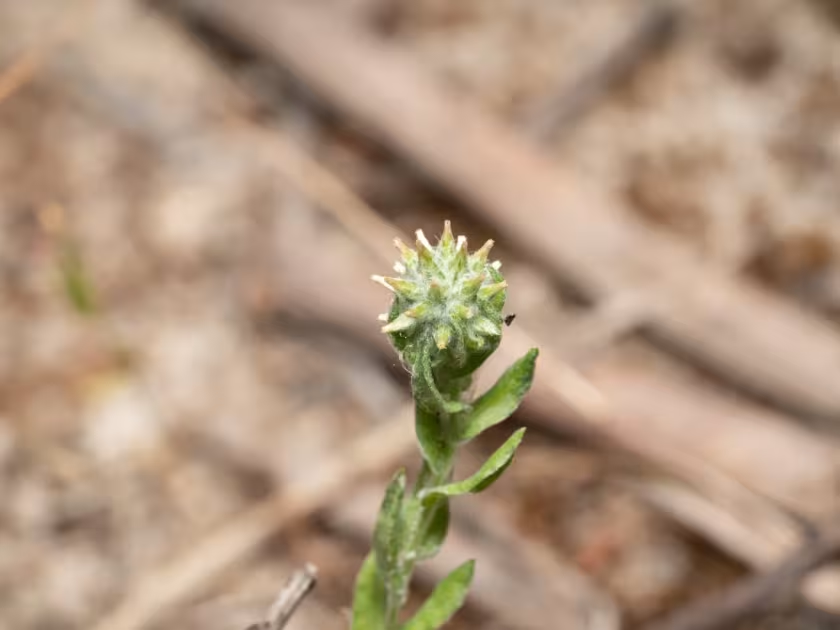
Description
Growing requirements
Filago eriocephala, commonly known as a type of woolly cudweed, belongs to the Asteraceae family. This plant is morphologically characterized by its dense, woolly-like pubescence that serves as a vital adaptation to arid and high-radiation environments.
Native to various Mediterranean and arid regions, this plant thrives in open, sunny habitats with poor, rocky, or sandy soils. It is an annual plant that completes its life cycle within a single growing season, typically favoring dry conditions.
In terms of cultivation, the soil must possess excellent drainage characteristics. Any accumulation of moisture around the root zone is detrimental to the survival of Filago eriocephala, as it leads to root asphyxiation and decay.
The plant demonstrates high efficiency in nutrient uptake from soil with low organic matter content. Supplemental fertilization is generally unnecessary and can sometimes be counterproductive if nitrogen levels are too high.
Optimal growth is observed in locations with high exposure to direct sunlight throughout the day. Sufficient spacing is required to ensure proper airflow, preventing the development of moisture-related pathogens within the dense foliage.
Main diseases and pests
Fungal infections are the most significant threat to Filago eriocephala. Due to its dense, woolly texture, the plant easily retains surface moisture, which becomes a breeding ground for mildew and other damp-related pathogens.
Pests such as aphids and spider mites can infest the plants during prolonged dry spells. These pests target the soft tissue under the protective pubescence, leading to chlorosis and stunted development of the flowering heads.
Maintaining a dry microclimate is the most effective preventative measure against disease. Cultivators should avoid overhead irrigation and ensure that the surrounding ground remains free of stagnant water.
Mechanical weed control is necessary during the early stages of plant development, as Filago eriocephala is not a strong competitor and can be easily overwhelmed by faster-growing weed species.
In case of severe infestations, targeted biological control is preferred over synthetic pesticides. The woolly structure of the plant makes it difficult to apply chemical treatments uniformly without causing physiological stress to the plant itself.